Horseradish (Armoracia rusticana)
Available again in July 2026. Sign up below to join the waiting list.
Horseradish is a hardy perennial known for its vigorous growth and pungent, aromatic roots traditionally used in culinary and herbal preparations.
Each order includes 1 dormant, bare-root horseradish plant with a healthy growing tip (see example images below). Simply plant into your garden upon arrival and it will emerge strongly in spring.
Organically grown at KoruKai Herb Farm without synthetic fertilisers, pesticides, or herbicides.
 Security policy
Secure credit card, bank transfer or POLi payment!
 Delivery policy
Proudly support NZ Post/CourierPost!
 Return policy
We exchange or refund if you are not happy!

Guarantee safe & secure checkout
Order is for one dormant, bare-rooted horseradish plant with a growing tip similar to the examples in the below image. 
Horseradish is a pungent, stimulating herb traditionally valued for its strong warming and cleansing properties. It has long been used to support overall wellness, particularly in relation to digestion, circulation, and respiratory comfort.
Freshly prepared horseradish contains potent volatile compounds that give it its characteristic heat and aroma. Traditionally, it has been used to help clear congestion and support the body during colds and seasonal illness, as well as to stimulate digestion and appetite. It is also widely used as a culinary condiment and as a base ingredient in preparations such as fire cider and horseradish sauce.
At KoruKai Herb Farm we value horseradish as both a medicinal and food plant, best appreciated when freshly harvested for maximum potency.
It is commonly used as a substitute for wasabi and pairs well with hearty meat and legume dishes.
Horseradish is a hardy perennial that grows best in fertile, well-drained soil with consistent moisture. It performs especially well in silty, river-bottom style soils but will also thrive in enriched clay or sandy loam with a near-neutral pH.
Prepare soil well by incorporating compost and well-rotted manure and breaking up compacted clumps to encourage strong root development.
Plant horseradish roots 30cm apart and mulch heavily to retain moisture and suppress weeds. Keep plants well-watered during the establishment phase, especially through summer dry periods.
Young plants require regular weeding in spring to prevent competition. Horseradish develops most of its storage roots in late summer and autumn, so it should not be allowed to dry out during this period.
Mature plants may produce tall flowering stems in late spring. These should be removed before seed set to prevent unwanted spread, as horseradish can become invasive if unmanaged.
Roots can be harvested in the autumn of the second year for best size and quality, although reasonable yields may be achieved after one full growing season under ideal conditions.
Harvest is typically done in mid-winter when the plant is dormant and most foliage has died back. Use a digging fork or spade to loosen soil on all sides before carefully lifting the root system and collecting broken sections as you go.
Replant smaller root pieces (about pencil thickness) if you wish to maintain ongoing production. Harvesting can continue through winter while the ground is workable, or alternatively in early spring before regrowth resumes.
Fresh roots should be stored cool and processed promptly for best quality.
Freshly dug roots are best stored refrigerated and grated within a few days, as quality declines as they dry or soften.
Grating releases pungent volatile oils responsible for horseradish’s heat. Adding vinegar halts this enzymatic reaction—adding it immediately produces a milder result, while waiting a few minutes before adding vinegar creates a stronger, hotter condiment.
Horseradish is commonly prepared fresh as a condiment, or used in traditional preparations such as sauces and fire cider.
More info on how to prepare the fresh root can be found here.
It acts as a substitute for Wasabi.
*This information is provided for educational purposes only and is not intended to diagnose, treat, cure, or prevent disease. Always consult a qualified and registered herbal practitioner before using medicinal herbs therapeutically.
Ingredients: live plant material to plant into your garden
Available again in July 2026. Sign up below to go onto the waiting list.
Solidago virgaurea
Family: Asteraceae
Common names: Goldenrod, European Goldenrod, Woundwort, true Goldenrod
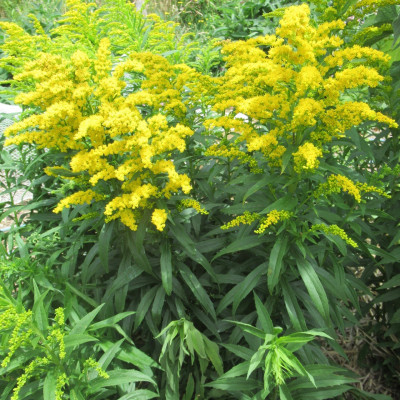
Goldenrod is a members of the daisy family and has vivid yellow flower heads that are made up of many, small, daisy-like flowers. It was traditionally used to heal wounds, and a yellow dye was produced from the flowers. Its a stunning plant in meadows, wild flower gardens and herb gardens.
Plant is shipped during its winter dormancy. It will be a bare rooted, dormant crown without any leaves or stalks, but with growing buds already in place (see image below). Simply plant into your garden over winter and watch it emerge in spring. Growing tips are below.
Available again in July 2026. Sign up below to go onto the waiting list.
Artemisia dracunculus var. sativa
Family: Asteraceae
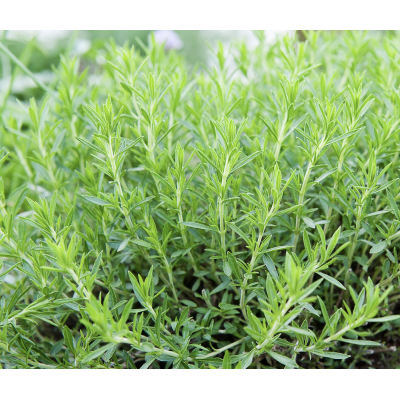
Aromatic and flavoursome herb, narrow green foliage with tiny yellow flowers in summer. Use fresh or dried. Delicious in hollandaise, bearnaise and tartar sauces.
Height in summer: 30-40cm
You will receive a dormant plant in its first year with visible shoots with no or very little leaves (plant is dormant in winter, see example photo below). It will emerge in spring and grow into a lush plant. Prune to create a bushy appearance.
Growing instructions are below.
Please sign up below to get an email once they are available again (July 2026).
Echinacea (echinacea purpurea) is a highly effective and safe immune herb that helps to jump-start the immune response in the body.*
These crowns are in their 2nd and 3rd year.
Growing tips are below.
Available again in July 2026. Sign up below to go onto the waiting list.
Peppermint (Mentha piperita)
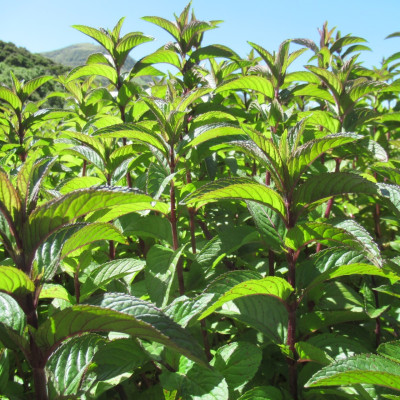
This is a beautiful peppermint with a very "pepperminty" flavour. It is the one we grow commercially and not available in many shops. When we wander through the garden section of hardware stores the pots say "peppermint" on the label, but is more like a garden mint and not the true peppermint that we grow.
We ship it nationwide in their winter dormancy.
Frost tolerant.
They come bare rooted with some growing tips in place.
Small: enough for a 20cm wide planter/pot
Large: enough to fill 1 m2 of garden bed.
Available again in July 2026. Sign up below to go onto the waiting list.
Russian Comfrey (Symphytum x uplandicum)
This plant is very valuable in a food forest and organic garden system.
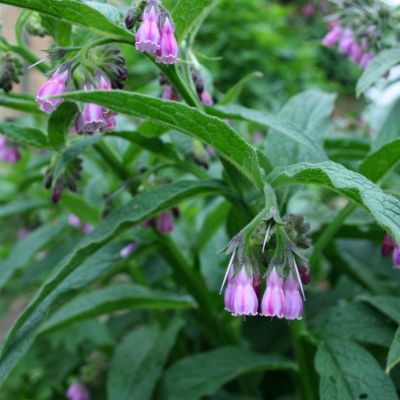
The roots and leaves have many medicinal uses. It contains high levels of allantoin, making it a powerful cell proliferant internally and externally. It is used to knit wounds and damaged tissue.*
Order is for 1 plant. It will be a strong crown cutting with a growing tip.
Simply plant into your garden over winter and watch them emerge in spring. Growing tips are below.
Available again in July 2026. Sign up below to go onto the waiting list.
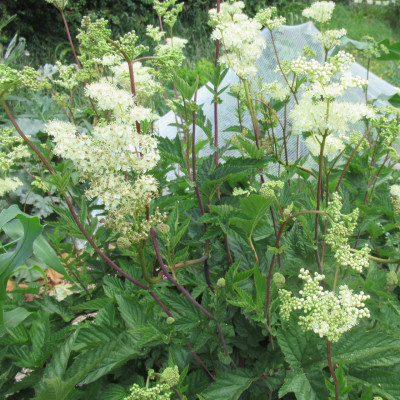
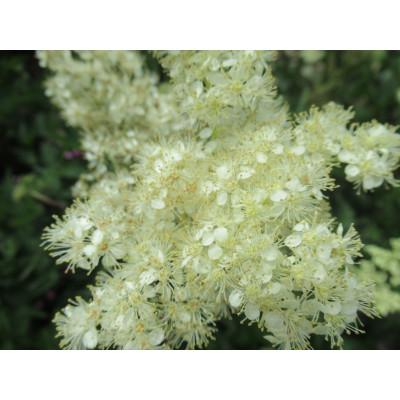
Meadowsweet (Filipendula ulmaria)
Family: Rosaceae
Common names: Meadowsweet or mead wort
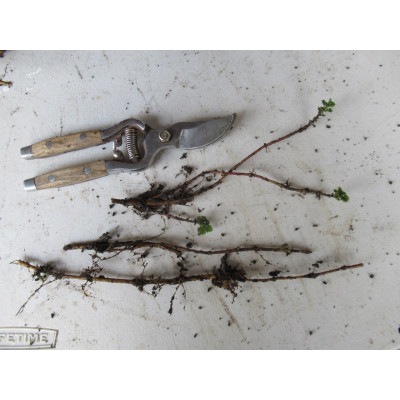
Order is for 1 crown. They grow well when getting divided during their winter dormancy and we get a 100% re-emerging rate.
Growing instructions are below.
Available again in July 2026. Sign up below to go onto the waiting list.
Smallanthus sonchifolius
Order is for 1 crown (see sample images below).
"Yacon" means "water root" in the Inca language and its tubers were historically highly valued as a wild source of thirst-quenching refreshment for travellers. It taste like a sweet cross between early apples and watermelon with a touch of pear.
The liquid can also be drawn off and concentrated to produce yacon syrup. The yacon is a species of perennial daisy traditionally grown in the northern and central Andes from Colombia to northern Argentina for its crisp, sweet-tasting, tuberous roots.
Available again in July 2026. Sign up below to go onto the waiting list.
Helianthus tuberosus
Commonly called Jerusalem artichoke, sunchoke or sunroot. It is a type of sunflower.
Jerusalem artichokes grown at KoruKai Herb Farm, Banks Peninsula. Free from synthetic fertiliser, pesticides and herbicides.
Order is for 3 tubers. You can choose between 3 small or 3 large ones (please choose below).
Growing instructions can be found here and below.
Available again in July 2026. Sign up below to go onto the waiting list.
Lovage (Levisticum officinale)
Lovage has long been cultivated in Europe, the leaves being used as a herb and soup ingredient, the roots as a vegetable, and the seeds as a spice, especially in southern European cuisine.
Dormant crown with growing bud/s. Simply plant into your garden as soon as you receive it and watch it emerge in spring. Growing tips are below.
Available again in July 2026. Sign up below to go onto the waiting list.
Skullcap (Scutellaria lateriflora)
Family: Lamiaceae
This plant have been grown organically at KoruKai Herb Farm, Banks Peninsula. Free from synthetic fertiliser, pesticides and herbicides.
You will get 3 dormant root pieces. Please find growing information and photos below.
Available again in July 2026. Sign up below to go onto the waiting list.
Evergreen Comfrey (Symphytum grandiflorum)
Order is for 1 plant, bare rooted.
Growing tips are below.
This plant is very valuable in a food forest and organic garden system. Can be grown throughout New Zealand. Frost tolerant.
Due to its smaller size and more compact growth than regular comfrey it is ideal for smaller gardens, urban environments and small food forests. It makes an excellent border plant and ground cover and does well planted around fruit trees.
Available again in July 2026. Sign up below to go onto the waiting list.
Marshmallow (Althea officinalis)
Marshmallow leaves and roots are used for pain and swelling (inflammation) of the mucous membranes that line the respiratory tract. They are also used for dry cough, inflammation of the lining of the stomach, diarrhea, stomach ulcers, constipation, urinary tract inflammation, and stones in the urinary tract.*
Order is for 1 plant. It will be a healthy crown cutting with a growing tip. Simply plant into your garden over winter and watch it emerge in spring. Growing tips are below.
Available again in July 2026. Sign up below to go onto the waiting list.
Rosmarinus officinalis
Native to the Mediterrannean, rosemary prefers a warm, moderately dry climate and a sheltered site. It is an upright woody herb with blue flowers. It flowers in late winter and spring and is loved by bees. It is a culinary herb with many medicinal uses (see below).
Order is for 1 bare rooted seedling.
Available again in July 2026. Sign up below to go onto the waiting list.
Elecampane (Inula helenium)
Healthy crown with growing tip/s (see image below). Simply plant into your garden and watch it emerge in spring. Growing tips and uses are below.
This plant have been grown organically at KoruKai Herb Farm, Banks Peninsula. Free from synthetic fertiliser, pesticides and herbicides.
It can be dug up and divided in the following winter. This one plant may grow into 3-6 plants within one year if conditions are right.
Available again in July 2026. Sign up below to go onto the waiting list.
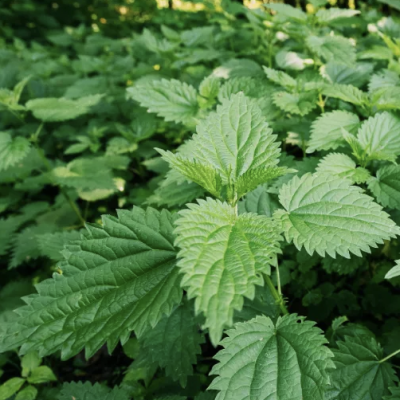
Perennial Stinging Nettle (Urtica dioica)
Family: Urticaceae
This plant have been grown organically at KoruKai Herb Farm, Banks Peninsula. Free from synthetic fertiliser, pesticides and herbicides.
You will get 3 dormant rhizomes (about 20cm each). Please find growing information and photos below.
Available again in July 2026. Sign up below to go onto the waiting list.
Skirret (Sium sisarum)
Skirret was a reasonably well known plant in Europe from the middle ages into the 19th century. It has names in many different European languages and most of them appear to translate into some variation of “sugar root”. It can be prepared similarly to carrots. We love it simply fried in some butter. It is sweeter than carrots and beautifully creamy and soft when cooked.
You will receive a seedling with some storage roots and shoots (see image further below). Simply plant into your garden as soon as you receive it and watch it emerge in spring. Growing tips are below.