



Yacon (Smallanthus sonchifolius)
Family: Asteraceae
Order includes 1 crown (see sample images below).
Yacon, meaning “water root” in the Inca language, has been treasured for centuries in the Andes as a refreshing, thirst-quenching food for travellers. This vigorous perennial, related to the daisy family, produces crisp, juicy tubers with a uniquely sweet flavour—often described as a blend of fresh apple, watermelon, and pear.
Traditionally grown from Colombia to northern Argentina, Yacon is prized for its delicious edible roots, which can be eaten fresh or processed into the increasingly popular Yacon syrup. Its sweet juice can be concentrated into syrup, while the crunchy tubers make a refreshing and nutritious addition to the kitchen garden.
 Security policy
Secure credit card, bank transfer or POLi payment!
 Delivery policy
Proudly support NZ Post/CourierPost!
 Return policy
We exchange or refund if you are not happy!

Guarantee safe & secure checkout
Organically grown at KoruKai Herb Farm, New Zealand, without the use of pesticides, herbicides, or other agrochemicals.
Yacon is a vigorous perennial root crop from the daisy family, traditionally cultivated for centuries in the Andes of South America for its sweet, crisp, and refreshing tubers. Its name means “water root” in the Inca language, reflecting the high water content of its juicy underground storage roots, once valued by travellers as a natural source of hydration.
The tubers have a unique flavour often described as a cross between fresh apple, watermelon, and pear, with a crisp texture that makes them delicious eaten fresh. Yacon is both highly productive and easy to grow, producing abundant edible tubers beneath the soil and rhizome crowns for replanting the following season.
As well as being a delicious food crop, Yacon has gained attention for its nutritional benefits. The tubers contain fructooligosaccharides (FOS), natural prebiotic sugars that support gut health and are less readily metabolised by the body than regular sugars. The sweet juice can also be reduced into Yacon syrup, a popular natural sweetener.
After one growing season dig up the yacon in winter once the above ground foliage has died back (June/July) and divide the crown 4-6 times before replanting it again in a fresh bed.
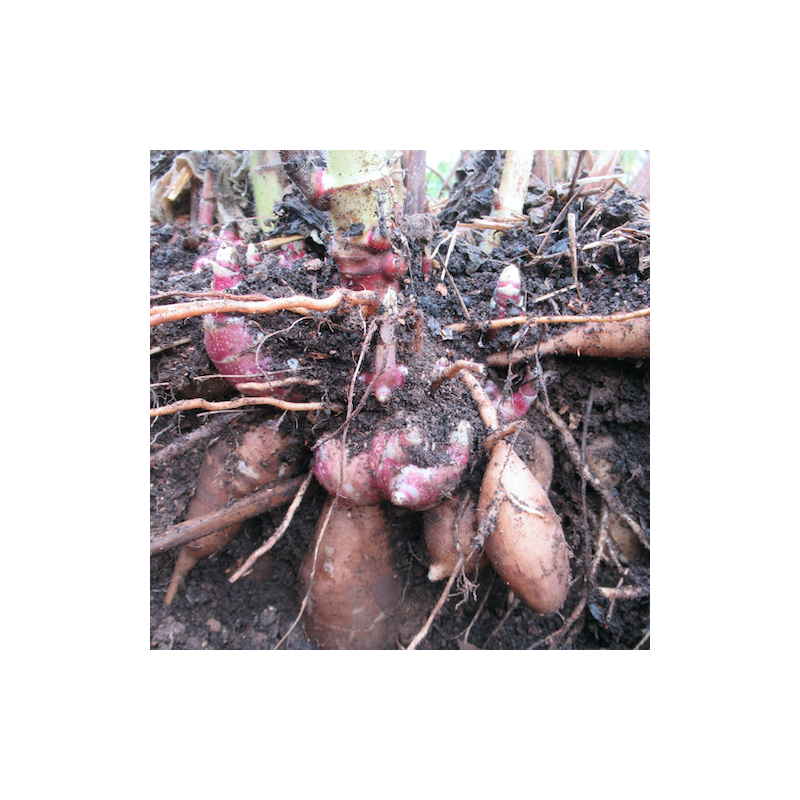
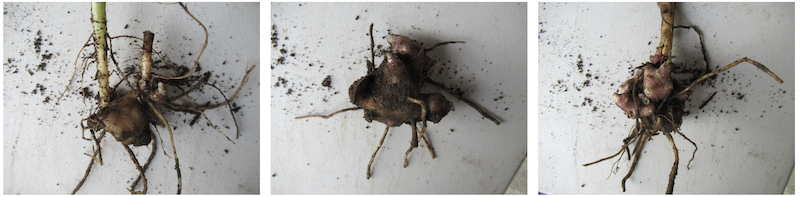
You will receive one dormant yacon crown similar to the image below. Bury it just below the soil surface without any shoots showing. It will push its way up in spring once soil temperatures warm up. It can be harvested in the first winter.
The crown we send may look like any of the below examples.
Read here about the Health Benefits of Yacon
Read here about Growing, Harvesting and Curing of Yacon
Yacon tubers are most often eaten fresh, where their crisp, juicy texture and sweet flavour make them a refreshing snack. They can also be sliced into salads, juiced, lightly cooked, or dehydrated.
One of Yacon’s unique qualities is its high content of prebiotic compounds, which support beneficial gut bacteria and digestive health. Unlike many root crops, its sweetness comes largely from FOS rather than starch, making it an interesting crop for those seeking lower-glycaemic food options.
Yacon syrup is made by extracting and reducing the tuber juice into a rich, dark sweetener traditionally used as a natural sugar alternative.
Yacon is easy to grow and thrives in full sun with fertile, well-drained soil and regular moisture. It prefers rich soil with plenty of organic matter and will reward good feeding with large, abundant tubers.
When your crown arrives, plant it directly into a pot or garden bed with the growing points facing upward and cover lightly with soil. Keep the soil evenly moist while new shoots establish. In cooler regions, crowns can be started in pots in early spring and transplanted once the weather warms.
Space plants 70–100 cm apart, as they can grow 1.5–2 metres tall and form large leafy clumps through summer. Mulch heavily to retain moisture and suppress weeds. Yacon enjoys warmth during the growing season and benefits from regular watering, especially during dry periods.
The plant will continue growing until frost or cool autumn weather causes the tops to die back. In colder parts of New Zealand, harvest before heavy frost.
Below: The KoruKai Herb Farm yacon patch in the middle of summer just before flowering.

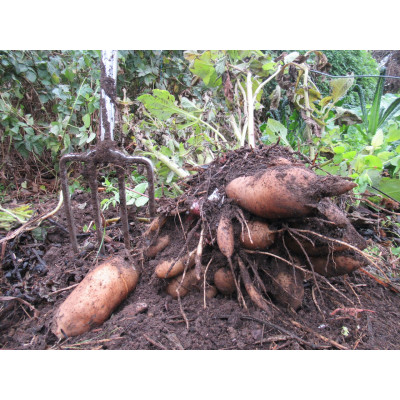
Image below: When scraping away some mulch and soil the yacón plant reveal their orange tubers as well as the pink shoots for next season. 
Yacon tubers are ready to harvest in late autumn after the tops have died back or yellowed, usually around May. This is when the tubers have reached their full size and sweetness. Some growers find the flavour improves after a short curing period or after a light frost.
Carefully dig around the plant to lift the entire root system. You will find two distinct parts: the larger edible tubers and the smaller crown rhizomes at the base of the stem. Separate the crowns carefully for replanting next season.
Store edible tubers in a cool, dry place and allow them to sweeten further over a week or two after harvest.
The crowns are the part used for propagation. Store them over winter in slightly damp sawdust, sand, or soil in a cool frost-free place until spring planting.
Yacon is highly productive and easy to multiply, with each mature crown often producing several new planting pieces for the following season.
Yacon can be eaten raw, juiced, dried, or cooked lightly. Its crisp texture makes it excellent for fresh eating, while its juice can be reduced into syrup for use as a natural sweetener.
Traditionally it has been valued as both a nourishing food and a digestive-supportive plant, making it a unique addition to the edible and medicinal garden.
The top reddish knobs (image above) are the growing shoots for next season and underneath the crown sit the edible tubers for eating. Simply dig up the whole plant, cut off the dried up stalks, twist off the edible tubers, divide the crown and replant.
If your winters are not overly wet, you can dig up only what you can eat in 1-2 weeks and leave the rest of the plants in the ground for later.
You may also want to dig them all up and cure them for long term storage. Please see our blog post about curing them.

*This information is for educational purposes only and is not intended to diagnose, treat, cure, or prevent any disease.
The Yacon plant I bought from you a couple of years back is thriving and doing well.
this is my first time ordering from KoruKai, when I recived my Yacon it looked healthy. it is now in my garden growing rely well. I do find i have to protect it for the slugs, I look forward to getting my first tast of them.
Family: Asteraceae
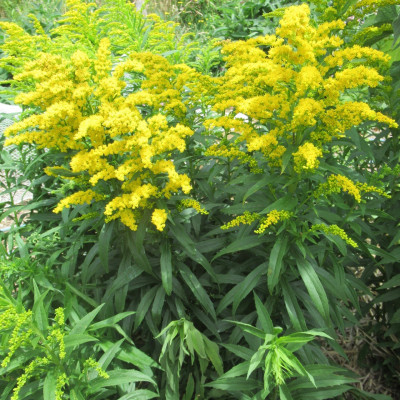
Common names: Goldenrod, European Goldenrod, True Goldenrod, Woundwort
Goldenrod is a beautiful hardy perennial with graceful spikes of brilliant golden-yellow flowers that bloom from late summer into autumn. A favourite in cottage gardens, wildflower meadows, herb gardens, and pollinator plantings, it attracts bees, butterflies, and many other beneficial insects while adding a splash of colour late in the growing season.
Traditionally valued in European herbal medicine, goldenrod has long been used as a medicinal herb and was once applied to support wound healing. The vibrant flowers have also been used to produce a natural yellow dye.
Your plant is shipped during its winter dormancy as a bare-root crown with healthy growing buds already formed but little or no top growth (see example image below). Simply plant it into your garden over winter and it will emerge vigorously in spring, returning year after year with minimal care.
Growing instructions can be found below.
Yomogi (Artemisia princeps)
Family: Asteraceae
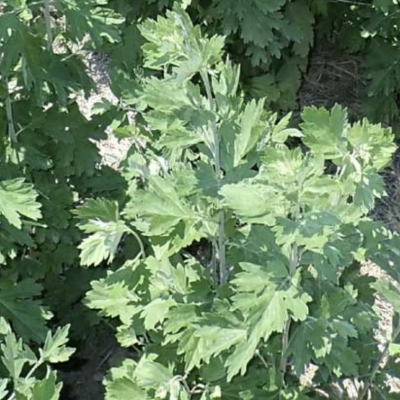
Yomogi, also known as Japanese Mugwort, is one of Japan's most treasured perennial herbs, valued for centuries as both a nourishing spring vegetable and an important medicinal plant. The tender young shoots have a pleasant, aromatic flavour and are traditionally used in herbal teas, soups, tempura, and the famous green yomogi mochi (rice cakes).
Easy to grow, hardy, and highly productive, Yomogi spreads by underground rhizomes to form lush clumps that return year after year. It thrives in full sun to partial shade and is well suited to gardens throughout New Zealand.
Yomogi dies down in winter. Your order includes one healthy bare-rooted plant with growing shoots, ready to establish quickly in your garden once temperatures warm up.
Growing instructions, harvesting advice, culinary uses, and traditional medicinal information are provided below.
Perennial Stinging Nettle (Urtica dioica)
Family: Urticaceae
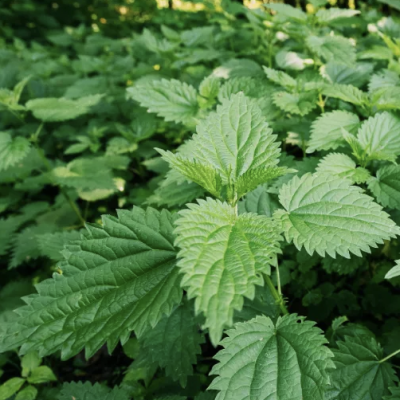
Stinging Nettle is one of the world's most valued medicinal and edible perennial herbs. Highly nutritious, vigorous, and remarkably versatile, it has been used for centuries as a nourishing food, traditional herbal medicine, natural fertiliser, compost activator, and livestock tonic. Once established, it forms productive patches that provide abundant harvests of tender spring shoots year after year.
Your order includes 3 dormant rhizomes (approximately 20 cm long each), ready to establish quickly and send up vigorous new growth in spring. Planting instructions, harvesting advice, medicinal uses, and processing information are provided below.
Marshmallow Crowns (Althaea officinalis)
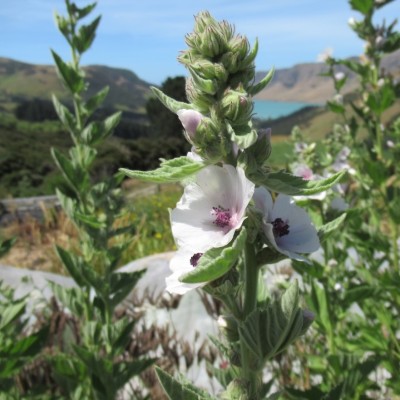
Marshmallow is a traditional medicinal herb valued for its soothing properties. The leaves and roots have historically been used to support inflammation and irritation of the respiratory, digestive, and urinary systems, including dry coughs, stomach irritation, and urinary tract discomfort.*
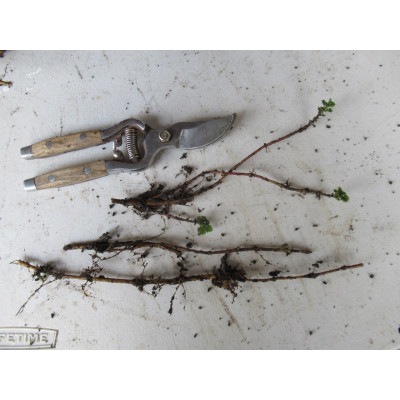
Marshmallow goes dormant in winter. Each order includes one marshmallow crown cutting with a growing tip (see image below). Simply plant into your garden over winter and watch it emerge vigorously in spring.
Evergreen Dwarf Comfrey (Symphytum grandiflorum)
Family: Boraginaceae
Common names: Dwarf Comfrey, Creeping Comfrey
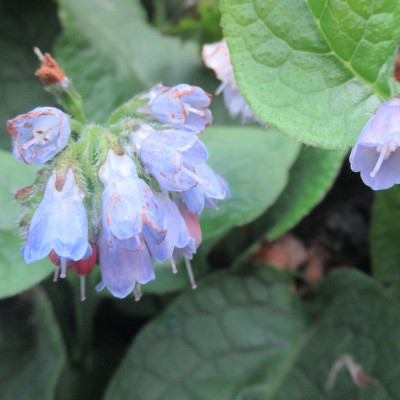
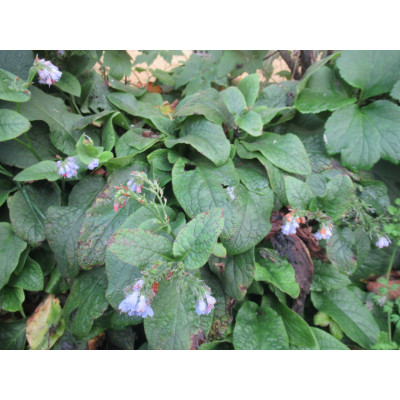
Evergreen Dwarf Comfrey is a low-growing, spreading perennial valued for its lush evergreen foliage, early nectar-rich flowers, and exceptional usefulness as a living mulch and groundcover. Unlike Medicinal Comfrey, this smaller species is primarily grown for its ecological and soil-building benefits, helping to suppress weeds, protect soil, and feed beneficial insects. Hardy, resilient, and easy to grow, it is an excellent addition to food forests, orchards, and regenerative gardens.
Due to its smaller size and more compact growth than regular comfrey it is ideal for smaller gardens, urban environments and small food forests. It makes an excellent border plant and ground cover and does well planted around fruit trees.
Can be grown throughout New Zealand. Frost tolerant.
Below you’ll find growing instructions, uses, and harvesting ideas.
Order is for 1 plant, bare rooted.
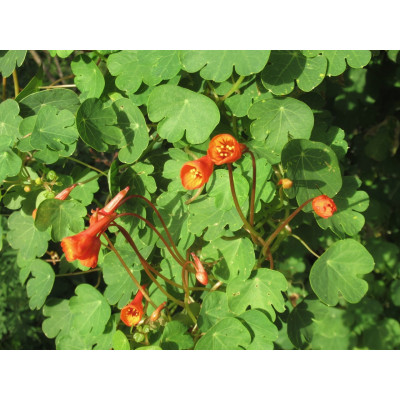
Mashua (pronounced Mah-shwuh) is a colourful Andean tuber closely related to the garden nasturtium. Exceptionally easy to grow, highly productive, and one of the most cold-hardy Andean root crops, it produces generous harvests of delicious tubers with very little care.
The tubers range from the size of small potatoes to large yams and develop a pleasantly sweet, slightly peppery flavour that becomes milder and sweeter when cooked. Even the young leaves and flowers are edible, making Mashua a truly versatile perennial vegetable.
A valuable companion plant, Mashua is traditionally grown alongside other crops because its aromatic foliage helps deter many insect pests, nematodes, and soil-borne diseases.
Each order includes either one large tuber or two medium-sized tubers, ready to plant. Simply place them in the garden when you receive them and watch them emerge in spring.
Growing instructions, harvesting advice, and culinary uses can be found below.
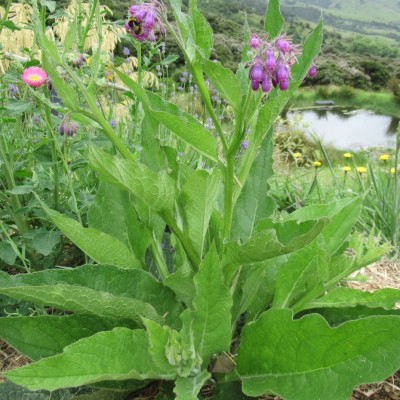
Medicinal Comfrey (Symphytum officinale)
Family: Boraginaceae
Common names: Comfrey, Common Comfrey, Knitbone
Medicinal Comfrey is a deep-rooted, hardy perennial herb renowned for its powerful healing properties and exceptional ability to build soil fertility. Traditionally known as “knitbone,” it has long been used to support tissue repair, bruising, sprains, and wound healing. Fast-growing and highly productive, Comfrey is an invaluable medicinal herb as well as a nutrient-rich mulch plant for the garden.
Below you’ll find growing instructions, medicinal uses, and herbal preparation ideas.
You will receive one dormant crown with a growing tip.
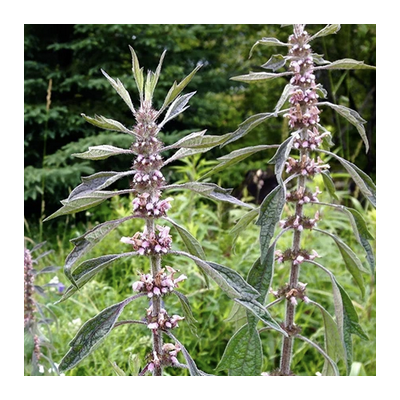
Motherwort (Leonurus cardiaca)
Family: Lamiaceae
Common names: Motherwort, Lion’s Tail
Motherwort is a hardy, easy-to-grow perennial herb from the mint family, valued for its calming effects on the nervous system and its long traditional use in supporting the heart and women’s health. With its tall leafy stems, soft pink flowers, and abundant summer growth, Motherwort is both medicinally powerful and highly attractive to bees and other pollinators.
Below you’ll find growing instructions, medicinal uses, and herbal preparation ideas.
Motherwort dies down in winter. You will receive a dormant plant.
Apple Mint (Mentha suaveolens)
Family: Lamiaceae
Common names: Apple Mint, Woolly Mint, Fuzzy Mint
Apple Mint is a wonderfully fragrant and easy-to-grow perennial herb, loved for its soft, velvety leaves and refreshing apple-mint flavour. Delicious in herbal teas, iced drinks, desserts, fruit salads, and savoury dishes, it is one of the most versatile mints for the kitchen. Its sweet aroma, attractive foliage, and nectar-rich flowers also make it a favourite with bees and other beneficial pollinators.
Your plant is supplied bare-rooted to ensure it arrives in excellent condition. Simply plant it into a pot or directly into the garden on arrival, water well for the first few days, and it will quickly establish into a vigorous, productive herb. Growing instructions, harvesting tips, and culinary uses are provided below.
Chinese Artichoke / Crosnes (Stachys affinis)
Family: Lamiaceae
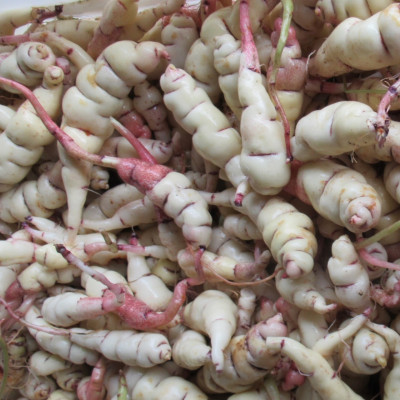
Chinese Artichokes, also known as Crosnes, are a delicious and unusual perennial root vegetable grown for their crisp, spiralled white tubers. Easy to grow and highly productive, they return year after year, producing abundant harvests from late autumn through winter.
The distinctive tubers resemble tiny grubs but are a gourmet delicacy with a wonderfully unique texture. Eaten raw, they are crisp, juicy, and slightly sweet, with a flavour reminiscent of water chestnuts. Cooked, they become tender, creamy, and subtly nutty, somewhere between a young potato, kūmara, and Jerusalem artichoke. In France, where they are known as Crosnes, they are traditionally braised in butter and fresh herbs—a simple preparation that beautifully highlights their delicate flavour.
Your order includes a starter pack of approximately five healthy tubers, ready for planting. Once established, the plants gradually multiply underground, providing increasingly generous harvests each year.
Chinese Artichokes are hardy, frost tolerant, and winter dormant, making them an excellent perennial vegetable for New Zealand gardens. Growing instructions, harvesting advice, and culinary tips are provided below.
Family: Asteraceae
Common names: Meadow Arnica, Arnica
Meadow Arnica is a hardy, spreading perennial prized for its vibrant golden-yellow flowers and long history of traditional herbal use. Unlike the European mountain arnica, this North American species is easier to grow in the home garden, forming attractive clumps that return year after year and provide abundant flowers for making infused oils, salves, balms, and liniments.
Easy to establish and cold hardy, Meadow Arnica thrives in full sun to partial shade in well-drained, compost-rich soil. It spreads gradually by underground rhizomes, making it an excellent addition to medicinal herb gardens and pollinator plantings.
Each order includes three dormant rhizomes with growing buds, ready to plant. Growing instructions, harvesting advice, and traditional herbal uses can be found below.
Woundwort (Stachys sylvatica)
Family: Lamiaceae
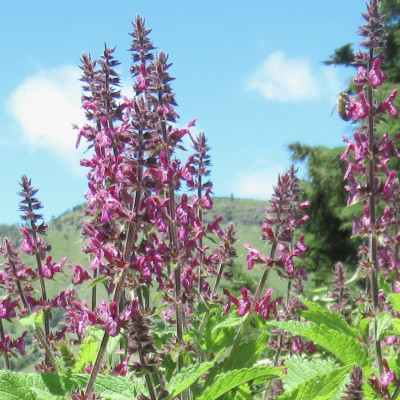
Woundwort is a hardy woodland perennial from the mint family with a long history of use as a traditional first-aid herb. For centuries it has been valued for supporting the healing of cuts, wounds, bruises, and skin irritations, earning its common name through generations of herbal use. In summer, it produces elegant spikes of deep purple flowers that are highly attractive to bees and other beneficial pollinators, while its lush green foliage makes an excellent addition to woodland gardens and food forests.
Your order includes 3 dormant plants with healthy growing tips, ready to establish quickly and send up vigorous new growth in spring. Please see the photos and growing information below.
Valerian Crowns (Valeriana officinalis)
Valerian is a well-known medicinal herb traditionally used to support restful sleep and help with insomnia.*
Each order includes 1 healthy valerian crown cutting with a growing tip. Plant directly into your garden over winter and it will emerge again in spring. See photos below for examples of the growing tips.
Organically grown at KoruKai Herb Farm without synthetic fertilisers, pesticides, or herbicides.
Sorrel (Rumex acetosa)
Family: Polygonaceae
Common names: Sorrel, Garden Sorrel, Lemon Sorrel
Sorrel is a hardy, long-lived perennial vegetable prized for its vibrant green leaves and distinctive fresh, lemony flavour. One of the first edible greens to emerge in spring, it provides an abundant harvest over many months and is delicious in salads, soups, sauces, omelettes, quiches, and pesto. Easy to grow and remarkably productive, Sorrel quickly forms generous clumps that can be divided every few years to create new plants.
Your Sorrel is supplied as a dormant root division during winter, with little or no foliage visible at the time of purchase. Simply plant it into the garden or a pot, and as the soil warms in spring it will send up vigorous new shoots.
During the first season, harvest lightly to allow the plant to establish a strong root system, and remove flower stalks as they appear to encourage continuous leaf production. After around a year, the clump can be lifted and divided to propagate additional plants and keep it growing vigorously for many years.
Skirret (Sium sisarum)
Skirret is a traditional European perennial root vegetable that was widely grown from medieval times through to the 19th century, valued for its sweet, clustered roots. Often referred to in old texts as a “sugar root,” it produces slender, finger-like roots that are sweeter and more aromatic than carrots when cooked.
The flavour is gently sweet, nutty, and floral, with a soft, creamy texture when roasted, boiled, or pan-fried. At KoruKai Herb Farm, we especially enjoy it simply sautéed in butter, where its natural sweetness really shines.
Skirret forms a clump of multiple edible roots from a single crown, making it a productive and rewarding perennial vegetable for the home garden. Once established, plants improve in yield each year as the root system expands.
Your order includes a healthy seedling with developing storage roots and shoots (see sample image below). Plant it directly into the garden on arrival and it will establish quickly, re-emerging strongly in spring.
Growing instructions and care details are provided below.
Multiplying Spring Onions (Allium schoenoprasum)
Family: Amaryllidaceae
Easy-care Multiplying Spring Onions, also known as Giant Chives, are one of the most productive perennial vegetables you can grow. Hardy, reliable, and long-lived, they form ever-expanding clumps that return year after year with almost no maintenance.
Enjoy a continuous harvest of crisp, mild-flavoured spring onions from September through to May. Simply harvest the largest stems as needed while leaving the smaller ones to continue growing. Each year the clumps become larger and more productive, providing an increasingly abundant supply without the need for repeated sowing, transplanting, or thinning.
Ideal for kitchen gardens, raised beds, food forests, and permaculture systems, Multiplying Spring Onions are frost hardy, easy to divide, and excellent for sharing with friends or expanding your own planting.
Your order includes a healthy starter clump, ready to establish quickly and provide years of reliable harvests. Planting instructions, growing tips, and harvesting advice are provided below.