
Jerusalem Artichoke (Helianthus tuberosus)
Also known as Sunchoke or Sunroot
Jerusalem Artichoke is a hardy, highly productive perennial sunflower grown for its crisp, sweet, and nutritious underground tubers. Easy to grow and remarkably resilient, it produces abundant harvests year after year with very little maintenance, making it an excellent addition to kitchen gardens, food forests, and permaculture systems.
The tubers can be enjoyed raw, roasted, sautéed, mashed, or added to soups and stews. Their flavour is often described as a cross between water chestnuts, potato, and artichoke, with a pleasant nutty sweetness.
Each order contains three healthy planting tubers. Choose either three small or three large tubers using the options below.
Growing instructions, harvesting advice, and culinary uses can be found below.
 Security policy
Secure credit card, bank transfer or POLi payment!
 Delivery policy
Proudly support NZ Post/CourierPost!
 Return policy
We exchange or refund if you are not happy!

Guarantee safe & secure checkout
Our Jerusalem Artichokes are organically grown at KoruKai Herb Farm, New Zealand, without the use of synthetic fertilisers, pesticides, or herbicides.
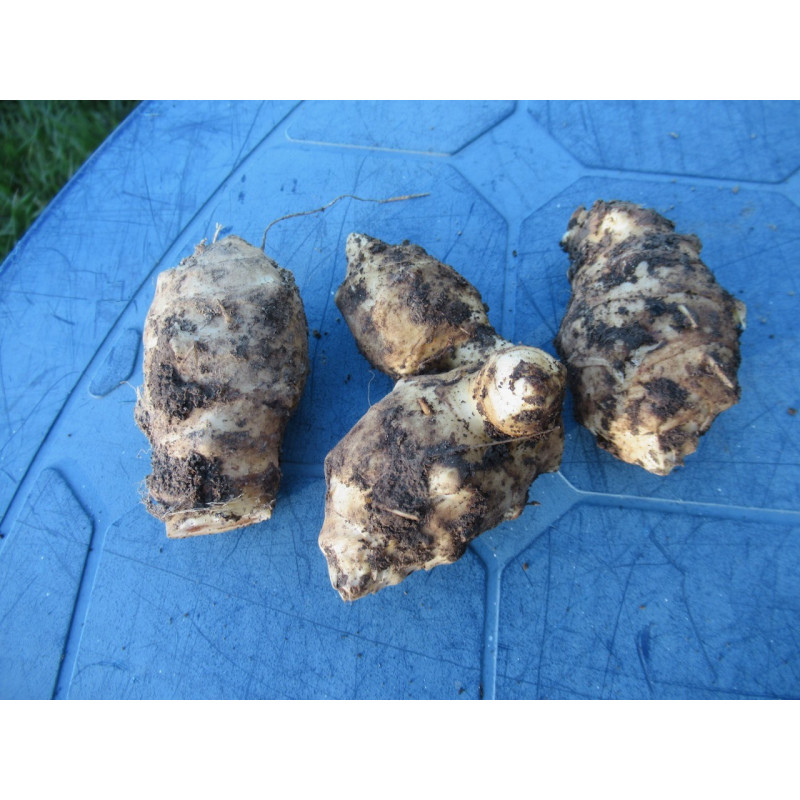
Each order contains three healthy planting tubers. Choose either three small (in below image on right) or three large (in below image on left) tubers using the options above.
.jpeg)
One plant when grown well produces the below quantity of edible tubers. You will get 5-10 times as much as you planted.

Jerusalem Artichoke, also known as Sunchoke or Sunroot, is a hardy perennial sunflower grown for its crisp, sweet, and highly nutritious underground tubers. Despite its name, it is neither related to Jerusalem nor to globe artichokes. Instead, it belongs to the sunflower family and produces cheerful yellow flowers in late summer that are highly attractive to bees and other beneficial insects.
One of the easiest perennial vegetables to grow, Jerusalem artichokes require very little maintenance once established and produce generous harvests year after year. Plants typically grow 2–3 metres tall, making them an excellent living screen, windbreak, or summer privacy hedge while also producing an abundant crop of edible tubers beneath the soil.
The tubers have a crisp texture when raw, similar to water chestnuts, with a pleasantly sweet, nutty flavour. When cooked they become creamy and slightly earthy, making them wonderfully versatile in the kitchen.
After one growing season, simply select the healthiest, largest tubers for replanting and enjoy the remainder in the kitchen. Over time your harvest will continue to improve as the plants become established.
Jerusalem artichokes are exceptionally hardy and can be grown throughout New Zealand. They tolerate heavy frosts, wind, and a wide range of soil types, although they perform best in deep, fertile, well-drained soil rich in organic matter.
Choose a position in full sun for maximum yields. The plants appreciate consistent moisture during the growing season but dislike prolonged waterlogging. Once established they are reasonably drought tolerant, although regular watering during dry periods will produce larger tubers.
Because the stems grow so tall, they are ideal for the back of vegetable gardens, food forests, or along fences where they can provide shelter from summer winds.
Plant the tubers into the garden or into large containers as soon as you receive them.
Prepare the area by incorporating generous amounts of compost or well-rotted manure into the soil before planting. Jerusalem artichokes thrive in fertile soil with plenty of organic matter.
On Banks Peninsula, we usually plant our tubers from late July through early August. Shoots generally emerge once the soil temperature reaches approximately 12°C, usually during spring.
Plant the tubers 8–10 cm deep, spacing them approximately 40–50 cm apart. If planting several rows, allow 80–100 cm between rows to provide plenty of room for the tall stems.
Apply a generous mulch after planting to conserve moisture and improve soil health. Suitable mulches include: Straw or hay, autumn leaves, grass clippings, woodchips, twigs, seaweed
Water regularly during dry periods, particularly while the plants are actively growing through spring and summer.
Jerusalem artichokes are ready to harvest once the foliage has completely died back after the first frosts, usually from late autumn through winter. Frost improves their flavour by converting more of the stored carbohydrates into sugars.
Simply loosen the soil with a garden fork and lift the tubers carefully. The plants often produce more tubers than expected, so dig thoroughly around each clump.
Select the largest, healthiest tubers for eating and keep several of the best-shaped tubers aside for replanting the following season. Any small tubers left behind in the soil will usually regrow, making Jerusalem artichokes one of the easiest perennial vegetables to maintain.
The tubers store best left in the ground until needed. If lifting the entire crop, store them unwashed in a cool, humid place or in slightly damp sand to prevent them from drying out.
Jerusalem artichokes are wonderfully versatile and can be enjoyed both raw and cooked.
They can be:
Their sweet, nutty flavour pairs beautifully with butter, garlic, thyme, rosemary, cream, cheese, mushrooms, and roasted meats.
One of our favourite ways to enjoy them at KoruKai Herb Farm is simply roasted or pan-fried in butter with a little sea salt and freshly ground black pepper.
Jerusalem artichokes are naturally rich in inulin, a prebiotic fibre that supports beneficial gut bacteria and digestive health. They also provide potassium, iron, vitamin C, and a range of antioxidants, making them a nutritious addition to the home garden.
*This information is provided for educational purposes only and is not intended to diagnose, treat, cure, or prevent any disease.
I planted in a large pot, 3 large crowns last winter, (well 1 crown broke so I ended up with 4 pieces). Despite my terrible gardening skills, lack of watering, only a handful of fertilizer and a top dressing of hay mulch I have enjoyed sunflowers in the garden and have grown enough tubers that we have had 4 good meals already and there is more to harvest. <br /> Wish I could find more advise on how to store them for planting again next year. I'm guessing what I don't harvest will do their thing next spring ??
Just letting you know how happy I am with the Jerusalem Artichokes Tubers received them this morning.
The artichokes arrived fast, were well packed and look great. Now to see how well I can grow them.
Received our artichokes as expected. Planted and have started to see shoots. Now excited for a bumper harvest in a few months!
My artichokes have rely taken of I'm so glade to have bought them I have wanted to grow them for a few years now, Big thanks for making them avalible.
Green sunshine in a pot! <br /> I've just spied their furry faces this week, every tuber you sent is up! Thank you
Thank you so much for the tubers that you sent me. They look great and I can't wait to plant them this weekend. Thank you KoruKai for supplying such great quality at a reasonable price.
Chinese Artichoke / Crosnes (Stachys affinis)
Family: Lamiaceae
Chinese Artichokes, also known as Crosnes, are a delicious and unusual perennial root vegetable grown for their crisp, spiralled white tubers. Easy to grow and highly productive, they return year after year, producing abundant harvests from late autumn through winter.
The distinctive tubers resemble tiny grubs but are a gourmet delicacy with a wonderfully unique texture. Eaten raw, they are crisp, juicy, and slightly sweet, with a flavour reminiscent of water chestnuts. Cooked, they become tender, creamy, and subtly nutty, somewhere between a young potato, kūmara, and Jerusalem artichoke. In France, where they are known as Crosnes, they are traditionally braised in butter and fresh herbs—a simple preparation that beautifully highlights their delicate flavour.
Your order includes a starter pack of approximately five healthy tubers, ready for planting. Once established, the plants gradually multiply underground, providing increasingly generous harvests each year.
Chinese Artichokes are hardy, frost tolerant, and winter dormant, making them an excellent perennial vegetable for New Zealand gardens. Growing instructions, harvesting advice, and culinary tips are provided below.
Available again in March/April 2027. Please sign up below to join the waiting list.
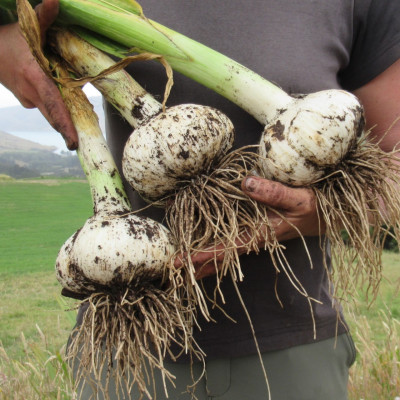
Elephant Garlic (Allium ampeloprasum)
Family: Alliaceae
Elephant Garlic is becoming increasingly popular for its large bulbs and mild, distinctive flavour. Easier to grow than true garlic, it produces reliable crops in a wide range of home gardens and is well suited to New Zealand conditions.
Each pack contains 3 seed cloves.
Organically grown at KoruKai Herb Farm without the use of chemical fertilisers, pesticides, herbicides, or fungicides.
Egyptian Walking Onions are a hardy, perennial “plant once and harvest for years” onion that keeps on giving season after season. Also known as Tree Onions, Top Onions, or Winter Onions, they produce edible greens, small bulbs, and unique bulbils that replant themselves naturally—walking their way across your garden.
Incredibly easy to grow and highly productive, these resilient onions multiply year after year, making them a must-have for any edible garden, food forest, or self-sufficiency setup.
1 bag contains 10 bulbils/topsets.
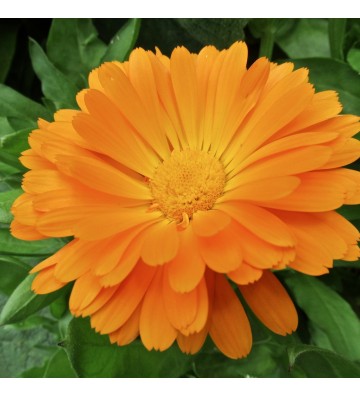
Calendula (Calendula officinalis) seeds from our specially selected KoruKai Herb Farm collection.
Over many seasons, we have carefully selected and bred these plants for their vibrant deep-orange colour and large flower heads. Beautiful in the garden and excellent for making rich, nourishing calendula-infused oils and herbal preparations.
This bush tomato is fantastic. No need to stake, no need to pinch out laterals. Very easy care and a prolific fruiter. Produces an abundance of fresh tomatoes for salads and cooking.
This is our favourite tomato to eat raw and for salads. Low in acidity and great flavour.
It produces orange, medium sized and round tomatoes.
This orange tomato contains higher levels of Tetra-cis-lycopene which is easily absorbed in the raw fruit and helps to promote health and fight against cancer and heart disease.
A fantastic cherry tomato. The plants are laden in summer. Riesentraube means "giant bunches".
Produces bunches of large red fruit with pointed ends.
Heirloom variety dating back to 1800's from Germany.
Good full bodied complex flavour.
This cover crop seeds or green manure seeds mix has been blended to achieve maximum benefit. It can help with common challenges such as compaction, weed pressure, pests and diseases, low fertility, leaching and erosion.
Best sown between August/September and December/January, depending on your climate.
This diverse mix maintains living soil cover in areas that would otherwise be bare. This mix contains seeds from 8 plant families as well as legumes (nitrogen fixing plants), which has been proven in field trials to be very beneficial to build soil structure and to increase beneficial microbes in the soil.
For autumn sowing please see our Autumn Mix.
Sowing rate: 25g per m2
Available in 500g (for 20 m2), 1kg (for 40 m2), 10kg (for 400 m2), 20kg (for 800 m2). Please select below.
Available again in March/April 2027 — please sign up below to join the waiting list.
White Southern Softneck is a vigorous, reliable, and historically significant garlic variety that rewards growers with beautiful bulbs, excellent flavour, and strong garden performance year after year.
Organically grown at KoruKai Herb Farm, Banks Peninsula, New Zealand.
Our seed garlic is grown without chemical fertilisers, pesticides, herbicides, or fungicides, producing strong, healthy cloves ideal for home gardens and small-scale growing.
Demand for our organic seed garlic is high every year and stock always sells out quickly.
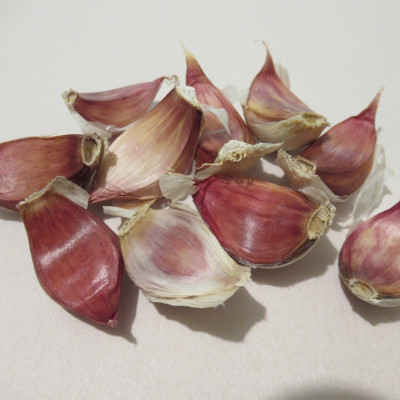
Each bag contains 10 seed garlic cloves as pictured. Please read the growing and storage information below and store cloves in a cool, dry place until planting time.
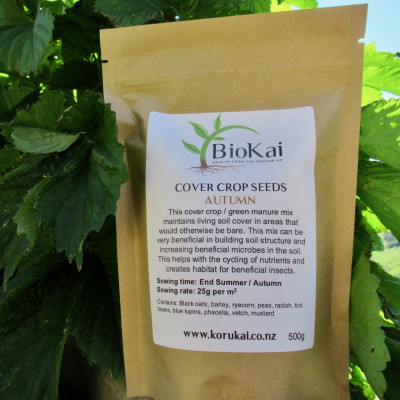
This cover crop seeds or green manure seeds mix has been blended to achieve maximum benefit. It can help with common challenges such as compaction, weed pressure, pests and diseases, low fertility, leaching and erosion.
Best sown between January/February and April/May, depending on your climate.
This diverse mix maintains living soil cover in areas that would otherwise be bare over winter. This mix contains seeds from 5 plant families as well as legumes (nitrogen fixing plants), which has been proven in field trials to be very beneficial to build soil structure and to increase beneficial microbes in the soil.
For spring sowing please see our Spring Mix.
Sowing rate: 25g per m2
Available in 500g (for 20 m2), 1kg (for 40 m2), 10kg (for 400 m2), 20kg (for 800 m2). Please select below.