
Russian Comfrey Crowns (Symphytum × uplandicum)
Available again in July 2026. Sign up below to join the waiting list.
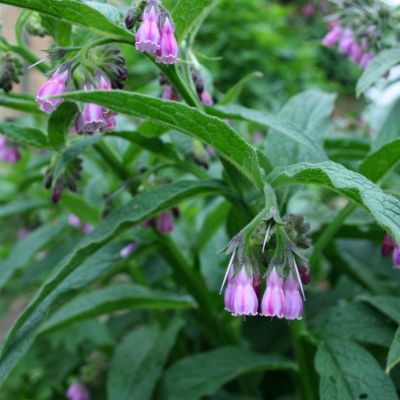
Russian comfrey is a highly valuable perennial for food forests and organic garden systems, known for its vigorous growth and deep nutrient accumulation.
Both the leaves and roots have been traditionally used in herbal practices. The plant is rich in allantoin, a compound associated with tissue regeneration, making comfrey a well-known herb for supporting skin and tissue repair both internally and externally.*
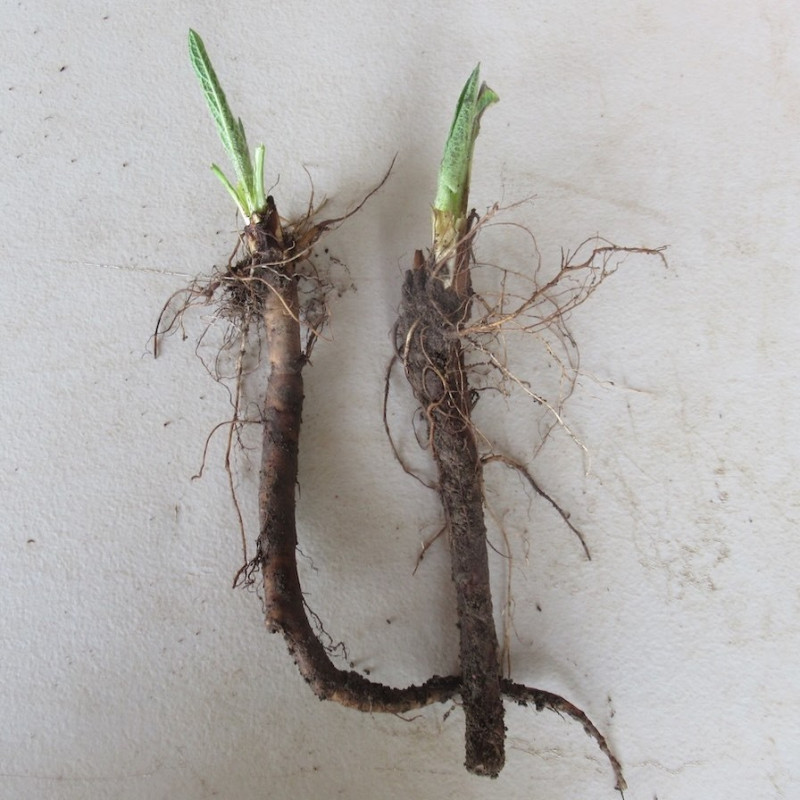
Each order includes 1 strong crown cutting with a healthy growing tip. Plant directly into your garden over winter and it will emerge strongly in spring.
 Security policy
Secure credit card, bank transfer or POLi payment!
 Delivery policy
Proudly support NZ Post/CourierPost!
 Return policy
We exchange or refund if you are not happy!

Guarantee safe & secure checkout
This plant have been grown organically at KoruKai Herb Farm, Banks Peninsula. Free from synthetic fertiliser, pesticides and herbicides.
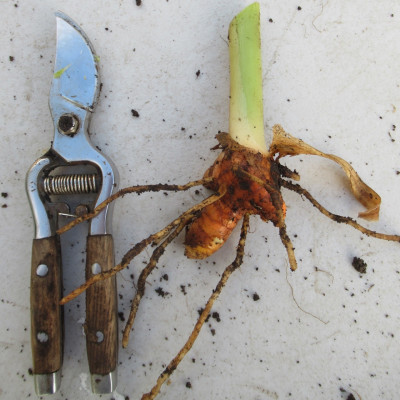
You will receive one dormant comfrey crown similar to one in the image below.

Ingredients: live plant material to plant into your garden
I bought this comfrey a few months ago and it has since sprouted several large leaves and already put out a runner with a second plant on it. I am very pleased as some shoots I bought elsewhere last season failed to grow at all. I am looking forward to being able to harvest leaves for the garden.
When our roots arrived, there was only a tiny green shoot, we planted them up as soon as we got them in late winter, and through our wet winter and sprong they have just GROWN so fast they are looking beautiful, great plants, all round my fruit trees now, will probably order more next year
Available again in July 2026. Sign up below to go onto the waiting list.
Evergreen Comfrey (Symphytum grandiflorum)
Order is for 1 plant, bare rooted.
Growing tips are below.
This plant is very valuable in a food forest and organic garden system. Can be grown throughout New Zealand. Frost tolerant.
Due to its smaller size and more compact growth than regular comfrey it is ideal for smaller gardens, urban environments and small food forests. It makes an excellent border plant and ground cover and does well planted around fruit trees.
Please sign up below to get an email once they are available again (July 2026).
Echinacea (echinacea purpurea) is a highly effective and safe immune herb that helps to jump-start the immune response in the body.*
These crowns are in their 2nd and 3rd year.
Growing tips are below.
Available again in July 2026 — sign up below to join the waiting list.
Allium schoenoprasum
Easy-care multiplying spring onions, also known as giant chives, that return year after year with minimal effort.
This hardy perennial forms expanding clumps that provide a continuous harvest from September through to May. No more repeated sowing, fiddly pricking out, or constant replanting—simply plant once and harvest fresh spring onions as needed for most of the year.
Perfect for kitchen gardens, raised beds, and permaculture systems.
Planting instructions can be found below.
Available again in July 2026. Sign up below to go onto the waiting list.
Curcuma longa
Family: Zingiberaceae
Turmeric is one amazing plant with numerous health benefits. Here an extract: "An M.D. Anderson Cancer Centre review of curcumin research, in the journal Phytotherapy Research in 2014, found that it regulates inflammation that "plays a major role in most chronic illnesses, including neurodegenerative, cardiovascular, pulmonary, metabolic, autoimmune and neoplastic diseases."
Order is for 1 small crown.
Available again in July 2026. Sign up below to join the waiting list.
Rumex acetosa
Family: Polygonaceae
Common names: Sorrel, Garden Sorrel, Lemon Sorrel
Sorrel is a hardy perennial herb known for its fresh, lemony flavour and vibrant green leaves. It is supplied as a dormant root cutting during winter, with little or no foliage visible at the time of purchase. The plant will re-emerge in spring and grow into a lush, productive clump.
In the first season, harvest leaves lightly to allow the plant to establish well, and remove any flower stalks to encourage ongoing leaf production. After approximately one year, the plant can be lifted and divided to produce multiple new plants.
Available again in July 2026. Sign up below to go onto the waiting list.
Skirret (Sium sisarum)
Skirret was a reasonably well known plant in Europe from the middle ages into the 19th century. It has names in many different European languages and most of them appear to translate into some variation of “sugar root”. It can be prepared similarly to carrots. We love it simply fried in some butter. It is sweeter than carrots and beautifully creamy and soft when cooked.
You will receive a seedling with some storage roots and shoots (see image further below). Simply plant into your garden as soon as you receive it and watch it emerge in spring. Growing tips are below.
Available again in July 2026. Sign up below to go onto the waiting list.
Allium ampeloprasum var. porrum
We love those leeks as they are easy to grow, need little care and attention and are very giving. They come into full production over winter and produce well into spring when our winter leek crop is finished for the year.
Easy care multiplying leeks. They grow as thick as your thumb (see image).
You will get a starter clump with 3-4 small leeks.
Planting instructions are below.
Elecampane Crowns (Inula helenium)
Available again in July 2026. Sign up below to join the waiting list.
Elecampane is a striking medicinal perennial traditionally valued for supporting respiratory health and herbal wellness practices.*
Each order includes 1 healthy elecampane crown with active growing tip(s) (see images below). Simply plant into your garden over winter and watch it emerge vigorously in spring.
Under good growing conditions, a single plant can often be lifted and divided the following winter, producing approximately 3–6 new plants within a year.
Organically grown at KoruKai Herb Farm without synthetic fertilisers, pesticides, or herbicides.
True Peppermint Dormant Bare Root Cuttings (Mentha × piperita)
Available again in July 2026. Sign up below to join the waiting list.
A true, high-quality peppermint selected for its strong, clean flavour and reliable vigour - distinct from common garden mints often sold under the same name. This is the same commercial strain grown at KoruKai Herb Farm and is rarely available through retail outlets.
Plants are supplied as dormant bare-root cuttings with active growing tips, shipped nationwide during winter dormancy for easy establishment.
Frost tolerant and highly productive once established.
Available sizes:
Available again in July 2026. Sign up below to go onto the waiting list.
Smallanthus sonchifolius
Order is for 1 crown (see sample images below).
"Yacon" means "water root" in the Inca language and its tubers were historically highly valued as a wild source of thirst-quenching refreshment for travellers. It taste like a sweet cross between early apples and watermelon with a touch of pear.
The liquid can also be drawn off and concentrated to produce yacon syrup. The yacon is a species of perennial daisy traditionally grown in the northern and central Andes from Colombia to northern Argentina for its crisp, sweet-tasting, tuberous roots.
Available again in July 2026. Sign up below to go onto the waiting list.
Artemisia dracunculus var. sativa
Family: Asteraceae
Aromatic and flavoursome herb, narrow green foliage with tiny yellow flowers in summer. Use fresh or dried. Delicious in hollandaise, bearnaise and tartar sauces.
Height in summer: 30-40cm
You will receive a dormant plant in its first year with visible shoots with no or very little leaves (plant is dormant in winter, see example photo below). It will emerge in spring and grow into a lush plant. Prune to create a bushy appearance.
Growing instructions are below.
Available again in July 2026. Sign up below to go onto the waiting list.
Stachys affinis
The tubers have a distinct shape and look a bit like a grub. When eaten raw they are crisp and sweet like a water chestnut. When fried they are more starchy, soft and sweet, resembling a slightly nutty potato or kumara. In France they are known as crosnes and are typically served braised in herbs and butter, which is our preferred way to eat them. They are a great brain food.
Order is for a starter bag of about 5 tubers.
Growing instructions can be found below. Frost tolerant as they go dormant over winter.
Available again in July 2026. Sign up below to go onto the waiting list.
Rosmarinus officinalis
Native to the Mediterrannean, rosemary prefers a warm, moderately dry climate and a sheltered site. It is an upright woody herb with blue flowers. It flowers in late winter and spring and is loved by bees. It is a culinary herb with many medicinal uses (see below).
Order is for 1 bare rooted seedling.
Available again in July 2026. Sign up below to go onto the waiting list.
Evergreen Comfrey (Symphytum grandiflorum)
Order is for 1 plant, bare rooted.
Growing tips are below.
This plant is very valuable in a food forest and organic garden system. Can be grown throughout New Zealand. Frost tolerant.
Due to its smaller size and more compact growth than regular comfrey it is ideal for smaller gardens, urban environments and small food forests. It makes an excellent border plant and ground cover and does well planted around fruit trees.
Available in July 2026. Sign up below to go onto the waiting list.
Wormwood (Artemisia absinthium)
Family: Asteraceae
Common names: Wormwood, Absinthe Wormwood, Green Ginger
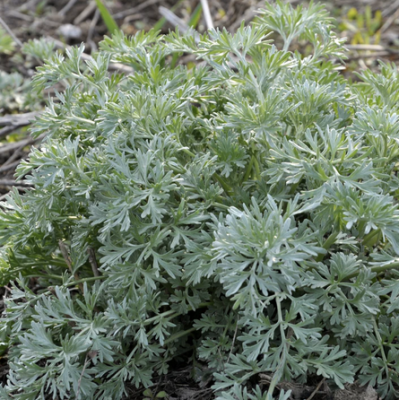
Wormwood is a hardy, aromatic perennial herb prized for its striking silvery foliage, intense bitterness, and powerful medicinal properties. Traditionally used as a digestive tonic and vermifuge, it is one of the classic bitter herbs of Western herbal medicine. Easy to grow and drought tolerant once established, Wormwood thrives in poor soils and makes a beautiful structural plant in the herb garden.
Wormwood dies down in winter. You will receive a dormant crown with established shoots.
Below you’ll find growing instructions, medicinal uses, and herbal preparation ideas.
Available again in July 2026. Sign up below to go onto the waiting list.
Hedychium coronarium
Family: Zingiberaceae
Commonly known as White Ginger, Butterfly Ginger, Himalayan Ginger. In New Zealand it is often sold as Galangal (especially on Trademe) as they are very hard to tell apart. But galangal is a different plant in the ginger family.
Emitting the scent of Gardenias, the flowers resemble a butterfly in flight. Rhizomes develop into large ginger roots that are good in cooking. It tastes like mild yellow ginger. Plant prefers moist or boggy soils and full sun.
Order is for 1 plant (see sample image below).
Horseradish (Armoracia rusticana)
Available again in July 2026. Sign up below to join the waiting list.
Horseradish is a hardy perennial known for its vigorous growth and pungent, aromatic roots traditionally used in culinary and herbal preparations.
Each order includes 1 dormant, bare-root horseradish plant with a healthy growing tip (see example images below). Simply plant into your garden upon arrival and it will emerge strongly in spring.
Organically grown at KoruKai Herb Farm without synthetic fertilisers, pesticides, or herbicides.