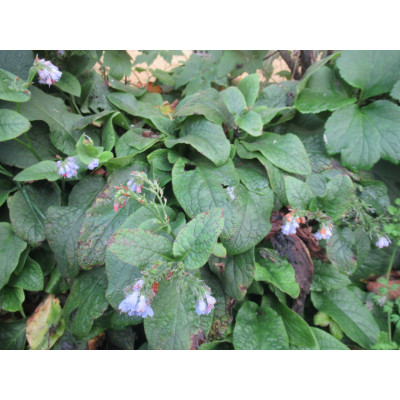
Myoga (Zingiber mioga)
Family: Zingiberaceae
Common names: Myoga, Japanese Ginger, Mioga
Myoga is a beautiful, hardy perennial ginger grown for its edible flower buds rather than its roots. It produces lush tropical-looking foliage throughout summer, followed by striking pink and cream flower buds that emerge at ground level in late summer and autumn. Harvested just before they open, these tender buds have a delicate, aromatic flavour with hints of ginger and citrus. They are delicious eaten raw, pickled, or lightly sautéed, adding a fresh, zesty flavour to salads, stir-fries, soups, and traditional Japanese dishes.
Your order includes 1–2 dormant rhizomes (depending on size), each with healthy, well-developed growth buds ready to produce vigorous new shoots in spring (see sample image below). You will receive either one large rhizome or two to three smaller rhizomes of equivalent size.
 Security policy
Secure credit card, bank transfer or POLi payment!
 Delivery policy
Proudly support NZ Post/CourierPost!
 Return policy
We exchange or refund if you are not happy!

Guarantee safe & secure checkout
Organically grown at KoruKai Herb Farm, New Zealand, without the use of pesticides, herbicides, or other agrochemicals.
Myoga, also known as Japanese Ginger, is a beautiful woodland perennial native to Japan, China, and South Korea. A member of the ginger family, it is grown not for its rhizomes, but for its exquisite edible flower buds and lush ornamental foliage. Unlike common culinary ginger, the rhizomes of Myoga are not edible.
The plant produces elegant clumps of broad, tropical-looking leaves that bring a lush, exotic feel to the garden throughout summer. In late summer and autumn, unusual pink and cream flower buds emerge directly from the soil at the base of the plant. These unopened flower buds are considered a delicacy in Japan, where they have been enjoyed for centuries for their delicate, aromatic flavour with subtle notes of ginger, citrus, and spice.
The name Myoga is thought to refer to its creeping, shallow rhizomes, which slowly spread beneath the soil, allowing the plant to form attractive colonies over time.
You will receive 1-2 dormant root fragment with good, defined growth nodes ready to send up a few strong shoots in spring (see image below and the planting video further below). 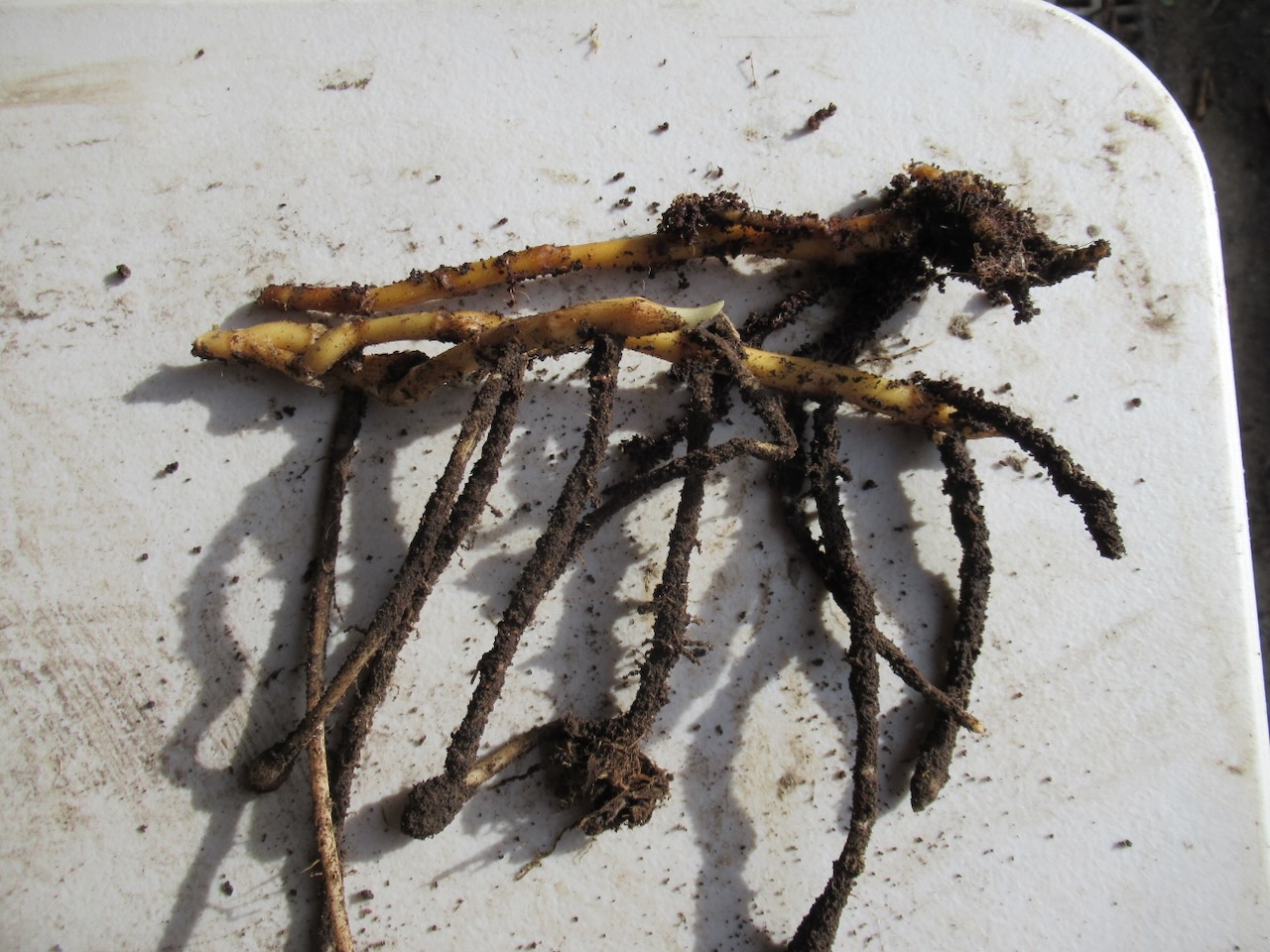
The unopened flower buds are the edible part of the plant and should be harvested just before they open. They have a crisp texture and refreshing flavour that complements both raw and cooked dishes. In Japanese cuisine, Myoga is traditionally thinly sliced and served as a garnish for miso soup, tofu dishes, noodles, sushi, and grilled vegetables. It is also commonly pickled, added to sunomono (vinegar-dressed cucumber salad), or finely shredded into salads and rice dishes.
In Korea, the flower buds are often skewered with meat or lightly pan-fried as part of seasonal dishes.
Their unique flavour is best appreciated fresh, where their gentle ginger aroma adds brightness without the heat of common ginger.
Please note: the rhizomes are used only for propagation and are not edible.
Myoga is an easy-to-grow perennial that thrives in partial shade and fertile, moisture-retentive, well-drained soil. It naturally grows on woodland floors, so it appreciates consistent moisture, rich organic matter, and protection from hot afternoon sun. It can be grown throughout New Zealand. In the warmer parts of the country it grows happily outdoors year-round. In cooler South Island climates, we recommend establishing plants in a tunnel house or greenhouse initially. Once well established, divisions can be transplanted outdoors during winter dormancy while keeping part of the original clump protected as insurance.
In cooler climates, Myoga will also tolerate full sun provided the soil remains evenly moist. During winter the foliage naturally dies back, forming an excellent protective mulch over the dormant rhizomes. Fresh shoots emerge as the soil warms in spring.
In frost-free and warmer regions, the foliage may remain evergreen and continue growing throughout the year.
Myoga also performs well in large pots, where regular watering and feeding will encourage strong growth and abundant flower buds.
Space plants approximately 50–60 cm apart. Apply compost annually and mulch generously to maintain soil moisture and encourage healthy growth.
Flower buds begin emerging at ground level in late summer through autumn, depending on your climate. Harvest them when they are still tightly closed and just breaking through the soil surface, before the flowers open. Using a sharp knife or secateurs, cut the buds cleanly at the base. Regular harvesting encourages continued production throughout the season.
Established plants will gradually increase in size each year, producing more flower buds as the clump matures.
Myoga spreads slowly by shallow underground rhizomes and is easily propagated by division during winter dormancy. Lift part of the clump and replant healthy rhizome sections with visible growth buds.
With its lush foliage, edible flower buds, and preference for shady conditions, Myoga is an outstanding addition to food forests, woodland gardens, and edible landscapes. It fills a valuable niche beneath fruit trees and among other shade-loving perennials, producing a gourmet harvest where many vegetables struggle to grow.
Watch our video below and learn how to plant Myoga.
Below: Well established Myoga

Horseradish (Armoracia rusticana)
Horseradish is a hardy, fast-growing perennial root crop valued for its powerful, pungent roots used in traditional culinary and herbal preparations. Once established, it produces vigorous leafy growth above ground and a deep, spreading root system below, forming a long-lived and highly productive plant.
Freshly harvested roots are grated or crushed to release their signature heat and aroma, traditionally used to make sauces, condiments, and medicinal preparations. A little goes a long way, making horseradish a rewarding and self-sustaining addition to the edible garden.
Each order includes 1 dormant, bare-root horseradish plant with a healthy growing tip (see example images below), ready to establish quickly and shoot strongly in spring.
Woundwort (Stachys sylvatica)
Family: Lamiaceae
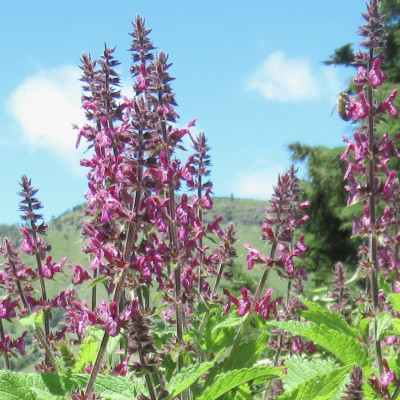
Woundwort is a hardy woodland perennial from the mint family with a long history of use as a traditional first-aid herb. For centuries it has been valued for supporting the healing of cuts, wounds, bruises, and skin irritations, earning its common name through generations of herbal use. In summer, it produces elegant spikes of deep purple flowers that are highly attractive to bees and other beneficial pollinators, while its lush green foliage makes an excellent addition to woodland gardens and food forests.
Your order includes 3 dormant plants with healthy growing tips, ready to establish quickly and send up vigorous new growth in spring. Please see the photos and growing information below.
Earth Chestnut (Bunium bulbocastanum)
Family: Apiaceae
Common names: Earth Chestnut, Pignut, Great Pignut, Earthnut
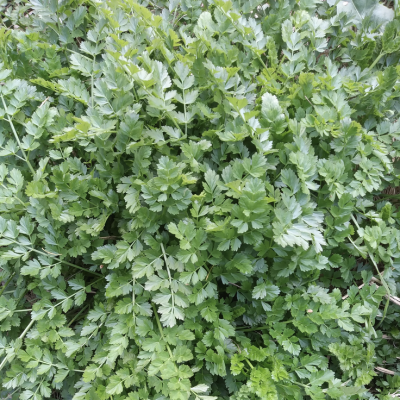
Earth Chestnut is a fascinating and productive perennial root vegetable, prized for its sweet, chestnut-flavoured tubers. Every part of the plant is edible—the small underground tubers can be eaten raw or cooked like potatoes, the delicate fern-like leaves have a fresh parsley-like flavour, and the aromatic seeds can be used as a substitute for cumin. A hardy and long-lived addition to the edible garden, Earth Chestnut is ideal for gardeners interested in unusual perennial food crops.
You will receive a healthy seedling with roots and young shoots (see images below). Plant it into its permanent position as soon as it arrives, and it will establish over winter before producing fresh growth in spring. Growing instructions, harvesting tips, and culinary uses are provided below.
Medicinal Comfrey (Symphytum officinale)
Family: Boraginaceae
Common names: Comfrey, Common Comfrey, Knitbone
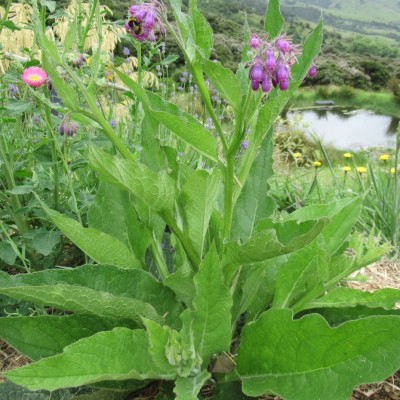
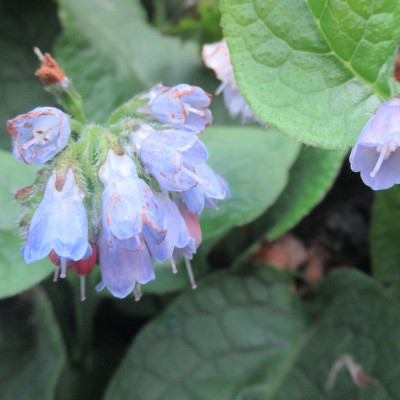
Medicinal Comfrey is a deep-rooted, hardy perennial herb renowned for its powerful healing properties and exceptional ability to build soil fertility. Traditionally known as “knitbone,” it has long been used to support tissue repair, bruising, sprains, and wound healing. Fast-growing and highly productive, Comfrey is an invaluable medicinal herb as well as a nutrient-rich mulch plant for the garden.
Below you’ll find growing instructions, medicinal uses, and herbal preparation ideas.
You will receive one dormant crown with a growing tip.
Available again in July 2026. Sign up below to go onto the waiting list.
Mashua (Tropaeolum tuberosum)
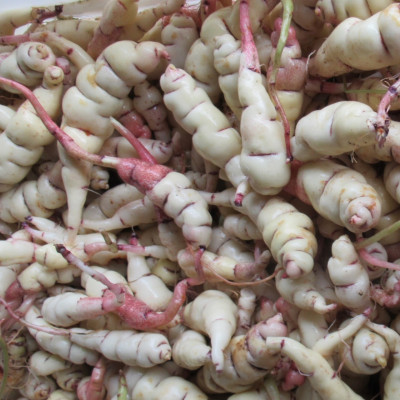
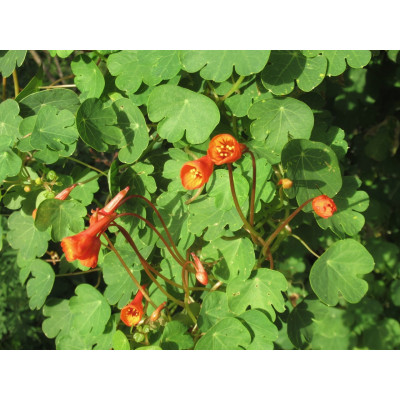
Mashua (pronounced Mah-shwuh) is an Andean tuber. A relative of the garden nasturtium, Mashua is one of the highest-yielding, and easiest-to-grow of the Andean tubers, and most resistant to cold. It also repels many insects, nematodes, and other pathogens, thus making it a valuable plant to intercrop with other species. The tubers about the size of small potatoes or big yams.
Mashua is high-yielding, even under conditions of almost no management. Even the leaves are edible!
You will receive 2 medium tubers or 1 large one (see image below).
Simply plant into your garden as soon as you receive it and watch it emerge in spring. Growing tips are below.
Marshmallow Crowns (Althaea officinalis)
Available again in July 2026. Sign up below to join the waiting list.
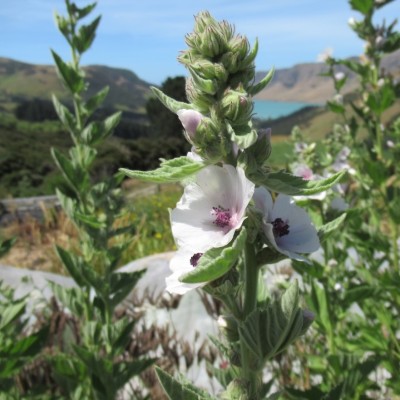
Marshmallow is a traditional medicinal herb valued for its soothing properties. The leaves and roots have historically been used to support inflammation and irritation of the respiratory, digestive, and urinary systems, including dry coughs, stomach irritation, and urinary tract discomfort.*
Each order includes 1 healthy marshmallow crown cutting with a growing tip. Simply plant into your garden over winter and watch it emerge vigorously in spring. Examples of growing tips are shown below.
Organically grown at KoruKai Herb Farm without synthetic fertilisers, pesticides, or herbicides.
Elecampane Crowns (Inula helenium)
Available again in July 2026. Sign up below to join the waiting list.
Elecampane is a striking medicinal perennial traditionally valued for supporting respiratory health and herbal wellness practices.*
Each order includes 1 healthy elecampane crown with active growing tip(s) (see images below). Simply plant into your garden over winter and watch it emerge vigorously in spring.
Under good growing conditions, a single plant can often be lifted and divided the following winter, producing approximately 3–6 new plants within a year.
Organically grown at KoruKai Herb Farm without synthetic fertilisers, pesticides, or herbicides.
Available again in July 2026. Sign up below to go onto the waiting list.
Solidago virgaurea
Family: Asteraceae
Common names: Goldenrod, European Goldenrod, Woundwort, true Goldenrod
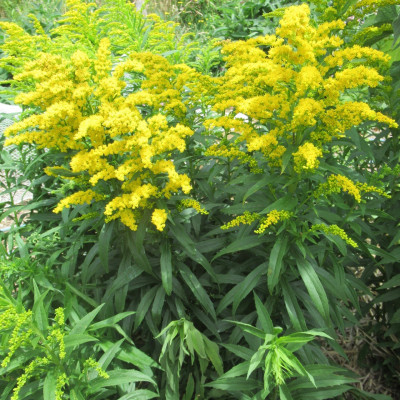
Goldenrod is a members of the daisy family and has vivid yellow flower heads that are made up of many, small, daisy-like flowers. It was traditionally used to heal wounds, and a yellow dye was produced from the flowers. Its a stunning plant in meadows, wild flower gardens and herb gardens.
Plant is shipped during its winter dormancy. It will be a bare rooted, dormant crown without any leaves or stalks, but with growing buds already in place (see image below). Simply plant into your garden over winter and watch it emerge in spring. Growing tips are below.
Available again in July 2026. Sign up below to go onto the waiting list.
Lovage (Levisticum officinale)
Lovage has long been cultivated in Europe, the leaves being used as a herb and soup ingredient, the roots as a vegetable, and the seeds as a spice, especially in southern European cuisine.
Dormant crown with growing bud/s. Simply plant into your garden as soon as you receive it and watch it emerge in spring. Growing tips are below.
Lemon Balm (Melissa officinalis)
Family: Lamiaceae
Common names: Lemon Balm, Balm Gentle
Lemon Balm is a vigorous, easy-to-grow perennial herb from the mint family, loved for its fresh citrus fragrance, soothing medicinal properties, and delicious flavour. Adaptable and generous, it thrives in a wide range of soil conditions and produces abundant growth throughout the season. With regular harvesting, we typically enjoy 3–4 cuts each year.
Lemon Balm dies down in winter. You will receive a dormant plant.
Below you’ll find growing instructions, medicinal uses, and herbal preparation ideas.
Available again in July 2026. Sign up below to join the waiting list.
Bulbine frutescens
Family: Asphodelaceae
Common names: Burn jelly plant, stalked bulbine, snake flower, cat’s tail
Burn Jelly Plant is a hardy, waterwise perennial valued for both its ornamental beauty and traditional medicinal uses. With its succulent foliage and cheerful star-shaped flowers, it makes an excellent ground cover, especially when planted en masse or used in rock gardens and dry landscapes. Easy to grow and drought tolerant, it is a popular addition to low-maintenance gardens.
Multiplying Leek (Allium ampeloprasum var. porrum)
Family: Amaryllidaceae
Multiplying Leeks are one of our favourite perennial vegetables at KoruKai Herb Farm. Exceptionally easy to grow, hardy, and highly productive, they require very little care while providing a reliable harvest throughout winter and well into spring—just when annual leeks are finishing for the season.
Unlike ordinary leeks, these perennial leeks multiply naturally by forming clumps of new plants each year. Individual stems grow to around thumb thickness, with a mild, sweet leek flavour that is perfect for soups, stews, stir-fries, quiches, and countless other dishes. Harvest what you need and leave the remaining plants to continue multiplying, creating an increasingly abundant patch year after year.
Your order includes a healthy starter clump of 3–4 young multiplying leeks, ready to establish quickly in your garden. Planting instructions and growing tips are provided below.
Apple Mint (Mentha suaveolens)
Family: Lamiaceae
Common names: Apple Mint, Woolly Mint, Fuzzy Mint
Apple Mint is a wonderfully fragrant and easy-to-grow perennial herb, loved for its soft, velvety leaves and refreshing apple-mint flavour. Delicious in herbal teas, iced drinks, desserts, fruit salads, and savoury dishes, it is one of the most versatile mints for the kitchen. Its sweet aroma, attractive foliage, and nectar-rich flowers also make it a favourite with bees and other beneficial pollinators.
Your plant is supplied bare-rooted to ensure it arrives in excellent condition. Simply plant it into a pot or directly into the garden on arrival, water well for the first few days, and it will quickly establish into a vigorous, productive herb. Growing instructions, harvesting tips, and culinary uses are provided below.
Available again in July 2026. Sign up below to go onto the waiting list.
Skullcap (Scutellaria lateriflora)
Family: Lamiaceae
This plant have been grown organically at KoruKai Herb Farm, Banks Peninsula. Free from synthetic fertiliser, pesticides and herbicides.
You will get 3 dormant root pieces. Please find growing information and photos below.
Evergreen Dwarf Comfrey (Symphytum grandiflorum)
Family: Boraginaceae
Common names: Dwarf Comfrey, Creeping Comfrey
Evergreen Dwarf Comfrey is a low-growing, spreading perennial valued for its lush evergreen foliage, early nectar-rich flowers, and exceptional usefulness as a living mulch and groundcover. Unlike Medicinal Comfrey, this smaller species is primarily grown for its ecological and soil-building benefits, helping to suppress weeds, protect soil, and feed beneficial insects. Hardy, resilient, and easy to grow, it is an excellent addition to food forests, orchards, and regenerative gardens.
Due to its smaller size and more compact growth than regular comfrey it is ideal for smaller gardens, urban environments and small food forests. It makes an excellent border plant and ground cover and does well planted around fruit trees.
Can be grown throughout New Zealand. Frost tolerant.
Below you’ll find growing instructions, uses, and harvesting ideas.
Order is for 1 plant, bare rooted.
White Ginger (Hedychium coronarium)
Family: Zingiberaceae
White Ginger, also known as Butterfly Ginger or Himalayan Ginger, is a striking perennial from the ginger family grown for its lush tropical foliage and highly fragrant white flowers. The blooms resemble delicate butterflies in flight and release a rich, sweet perfume often compared to gardenias, making it one of the most aromatic ornamental gingers.
Despite sometimes being mislabelled in trade (including in New Zealand), White Ginger is distinct from culinary galangal species. While its rhizomes are edible and carry a mild, ginger-like flavour, it is primarily grown as an ornamental and fragrant garden plant.
This vigorous plant produces large clumps of upright stems and spreads gradually via underground rhizomes, forming a bold, tropical presence in the garden. It thrives in moist to boggy soils and performs best in full sun to partial shade, especially where soil moisture is consistently high.
Your order includes one healthy plant, ready to establish and grow into a lush flowering clump. Growing instructions and care details are provided below.