
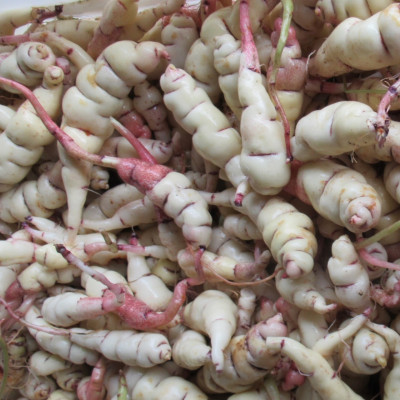
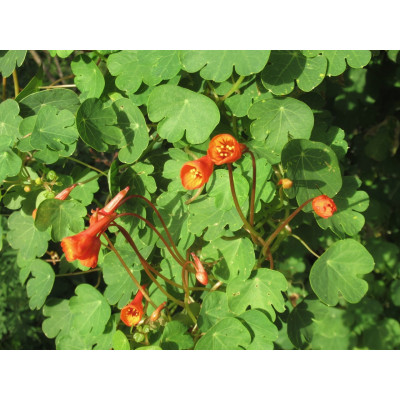
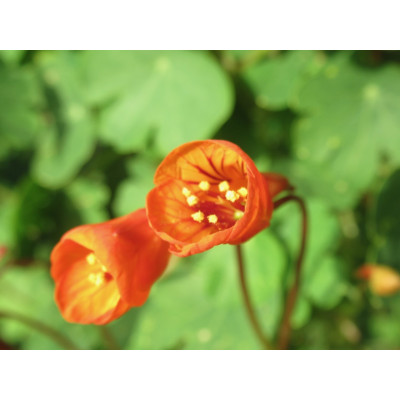

Mashua (pronounced Mah-shwuh) is a colourful Andean tuber closely related to the garden nasturtium. Exceptionally easy to grow, highly productive, and one of the most cold-hardy Andean root crops, it produces generous harvests of delicious tubers with very little care.
The tubers range from the size of small potatoes to large yams and develop a pleasantly sweet, slightly peppery flavour that becomes milder and sweeter when cooked. Even the young leaves and flowers are edible, making Mashua a truly versatile perennial vegetable.
A valuable companion plant, Mashua is traditionally grown alongside other crops because its aromatic foliage helps deter many insect pests, nematodes, and soil-borne diseases.
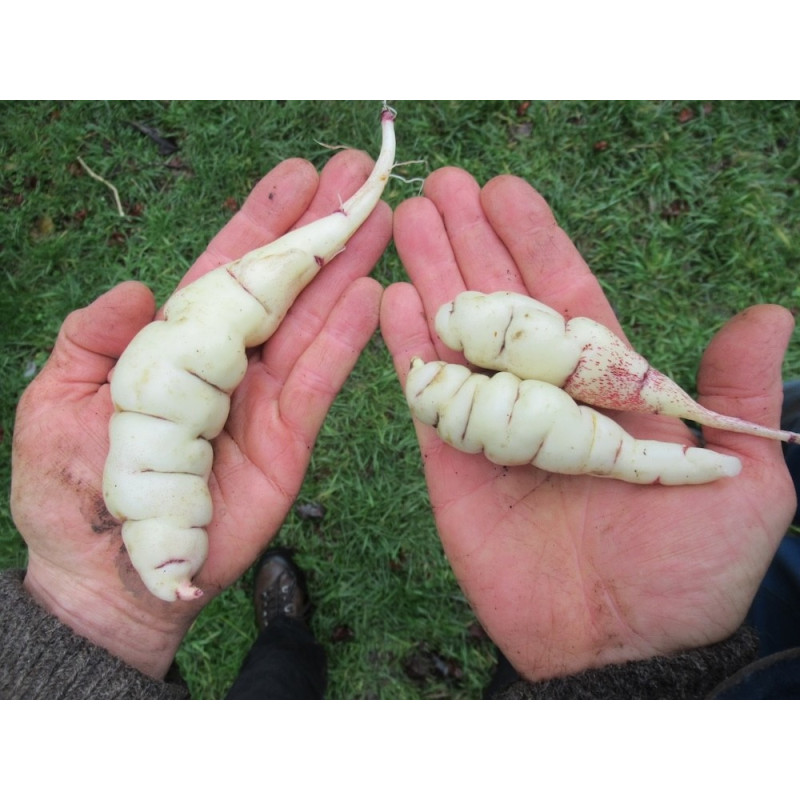
Each order includes either one large tuber or two medium-sized tubers, ready to plant. Simply place them in the garden when you receive them and watch them emerge in spring.
Growing instructions, harvesting advice, and culinary uses can be found below.
 Security policy
Secure credit card, bank transfer or POLi payment!
 Delivery policy
Proudly support NZ Post/CourierPost!
 Return policy
We exchange or refund if you are not happy!

Guarantee safe & secure checkout
Our Mashua is organically grown at KoruKai Herb Farm, New Zealand, without the use of synthetic fertilisers, pesticides, or herbicides.
You will receive 1 large tuber (left hand) or two medium tubers (right hand). The large tuber can be cut in half before planting (more info below). 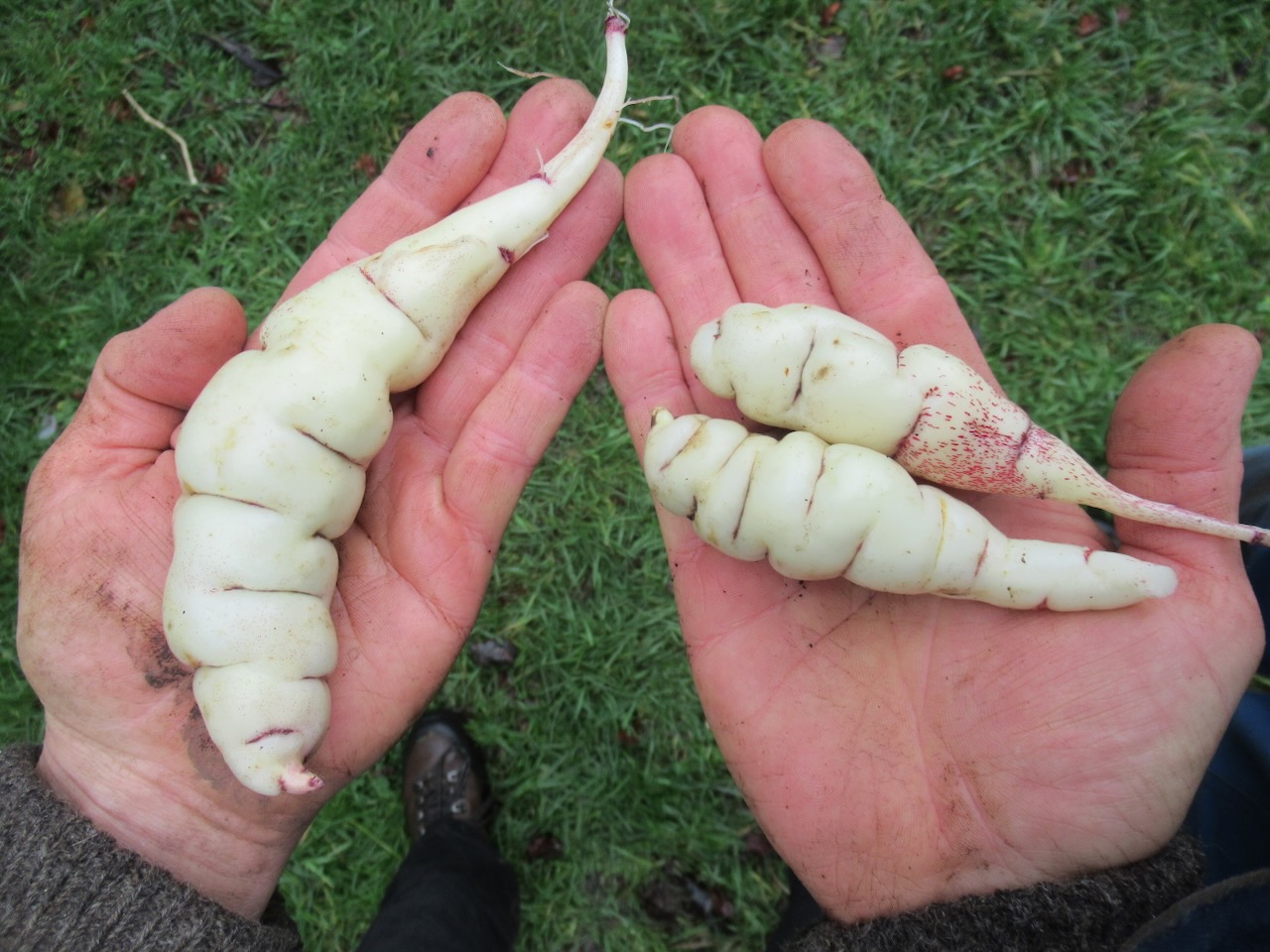
Mashua is one of the easiest and most productive Andean root crops to grow. Closely related to the garden nasturtium, it produces vigorous climbing vines, beautiful edible flowers, and generous crops of colourful, nutritious tubers. It has been cultivated in the Andes for thousands of years alongside potatoes, oca, and ulluco, where it remains an important traditional food crop.
At KoruKai Herb Farm it has become one of our favourite perennial vegetables. It grows vigorously through our food forest, scrambling over shrubs, fences, and trellises while producing outstanding yields with very little maintenance.
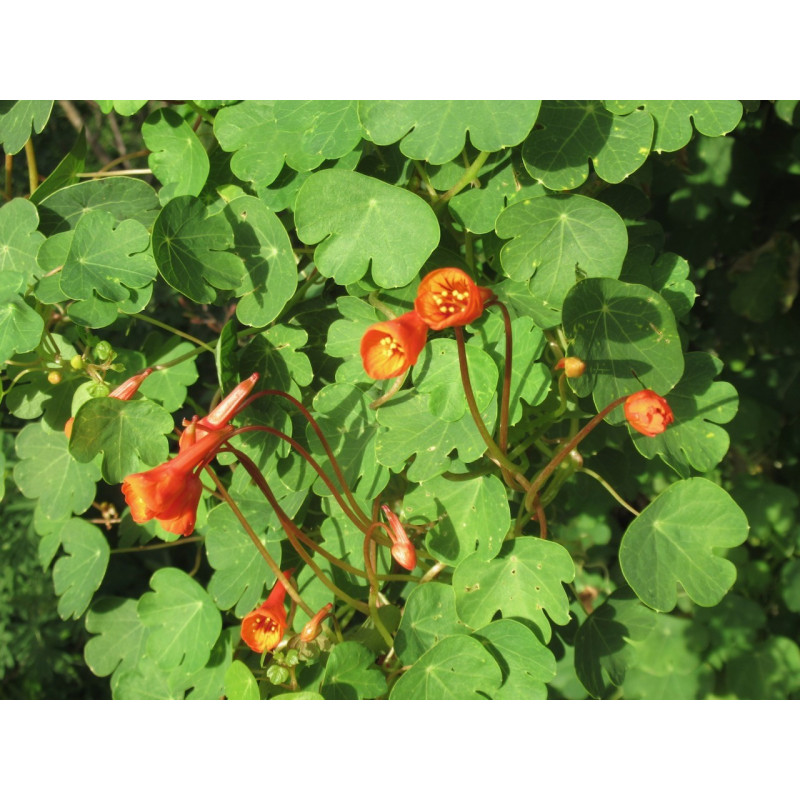
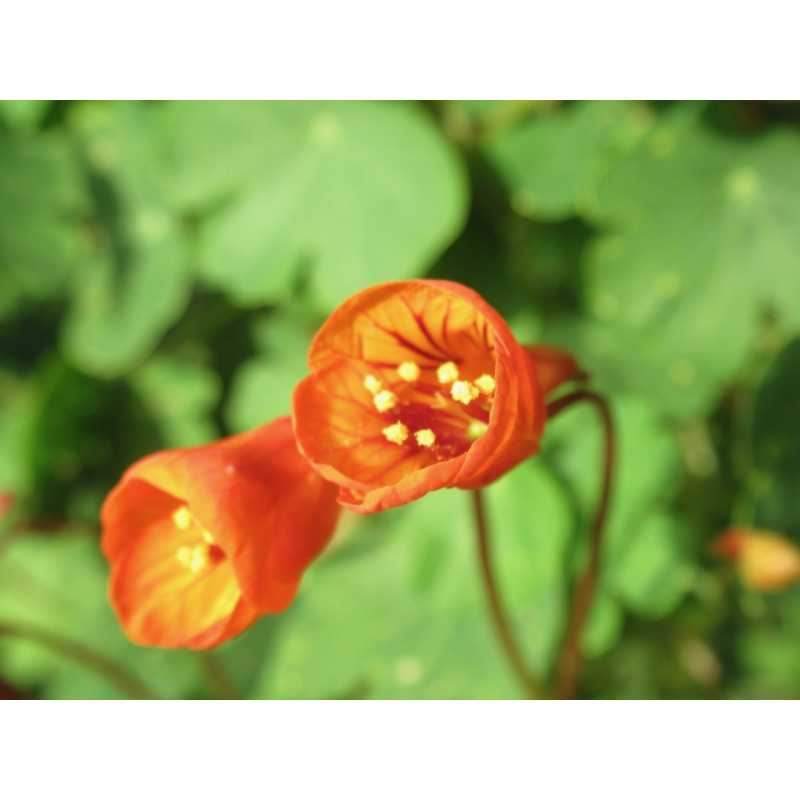
The vigorous vines produce attractive three- to five-lobed leaves and masses of bright orange, yellow, or occasionally red trumpet-shaped flowers during autumn. Given a support to climb, plants commonly reach 2.5–4 metres in height, although they also make an excellent edible groundcover when allowed to trail.
Beneath the soil, Mashua produces clusters of smooth, waxy tubers ranging from 8–20 cm long. Depending on the variety, tubers may be white, cream, yellow, orange, red, or purple.
Given a cool summer, consistent moisture, and a long frost-free autumn, Mashua can produce exceptional yields. At KoruKai Herb Farm we average around 4 kg of tubers per plant, with our best plant producing an incredible 6.7 kg in one season.
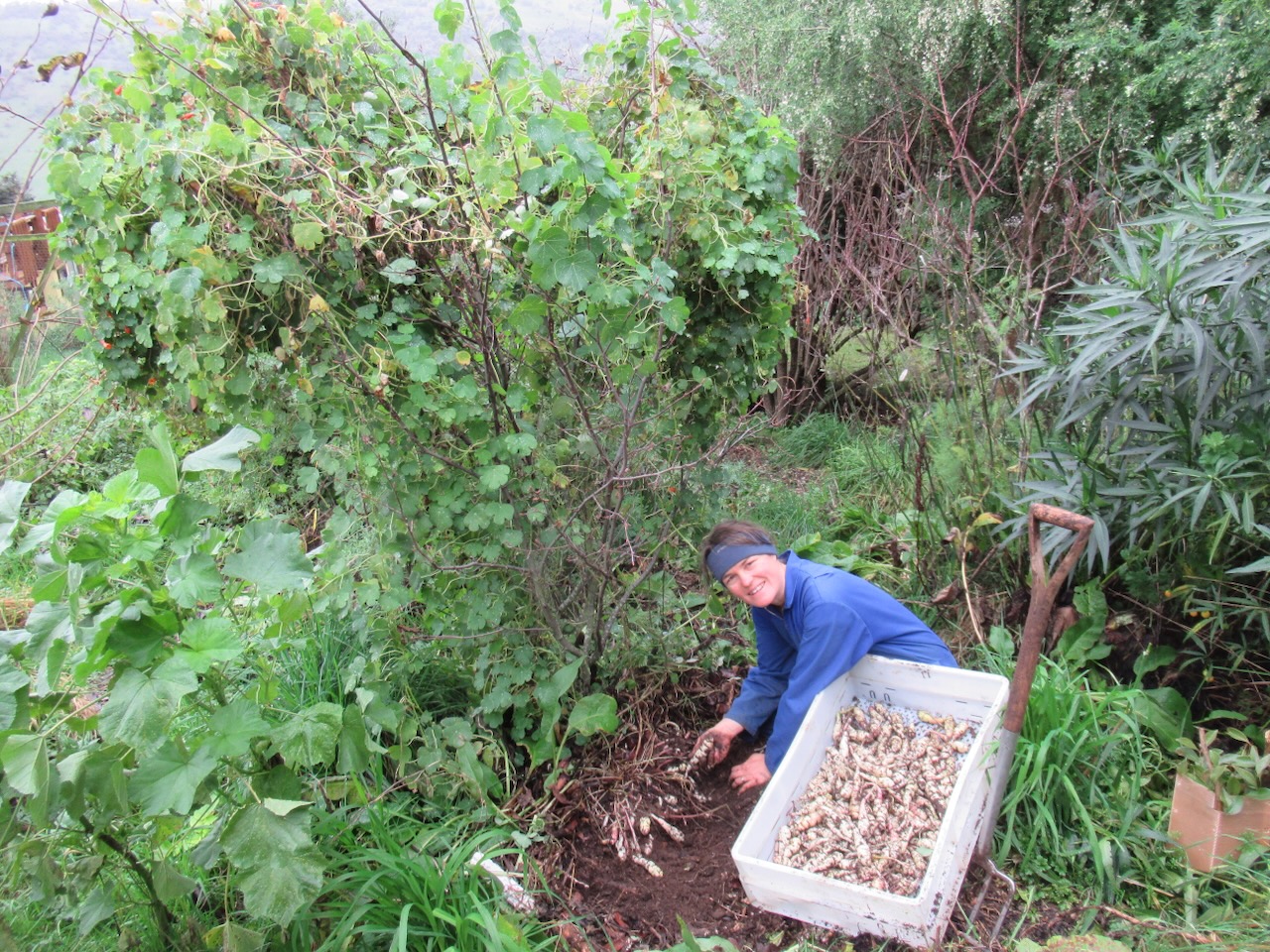
Mashua thrives in cool, moist climates and is one of the most cold-tolerant of the Andean root crops.
It grows exceptionally well throughout much of the South Island and performs well in cooler parts of the North Island. In warmer regions, choose a site with afternoon shade and reliable summer irrigation.
Plants prefer full sun in cooler climates, while afternoon shade is beneficial where summer temperatures regularly exceed 27°C.
Mashua grows well in a wide range of soils but performs best in fertile, well-drained soil rich in organic matter. Consistent moisture throughout summer is important for producing large, healthy tubers.
Given something to climb, Mashua quickly covers fences, trellises, arches, corn, fruit trees, or shrubs. It also performs well as a sprawling groundcover where space allows.
An added bonus is its natural resistance to many insect pests, nematodes, and soil-borne diseases, making it an excellent companion plant in vegetable gardens and food forests.
Plant the tubers as soon as you receive them. Choose a sunny position and prepare the soil by incorporating generous amounts of compost, vermicast, or well-rotted manure. Plant whole tubers approximately 5 cm deep and space plants 60–90 cm apart. Tubers may also be cut, like potatoes, provided each section has at least two healthy growing eyes. If cutting tubers, allow the cut surfaces to dry and heal for several days before planting.
Apply a generous layer of organic mulch such as straw, autumn leaves, woodchips, or grass clippings to conserve moisture and suppress weeds.
As the vines begin growing, provide a trellis or other support if you wish to grow vertically. Otherwise they will happily spread across the ground.
During the growing season, mound additional soil or mulch around the base of the plant once or twice. This protects developing tubers from sunlight and frost while often improving yields.
Water deeply during dry periods, particularly through summer and early autumn.
.jpeg)
Mashua forms its tubers late in the season, once day length falls below approximately 14 hours. For this reason it benefits from a long, frost-free autumn.
Harvest once the foliage begins to yellow and die back in late autumn or early winter.
Carefully dig around the base of the plant to reveal the clusters of colourful tubers. Select the largest, healthiest tubers for replanting the following season and enjoy the remainder in the kitchen.
Freshly harvested tubers can be eaten immediately but become noticeably sweeter if left in a cool, bright place or indirect sunlight for several days after harvest.
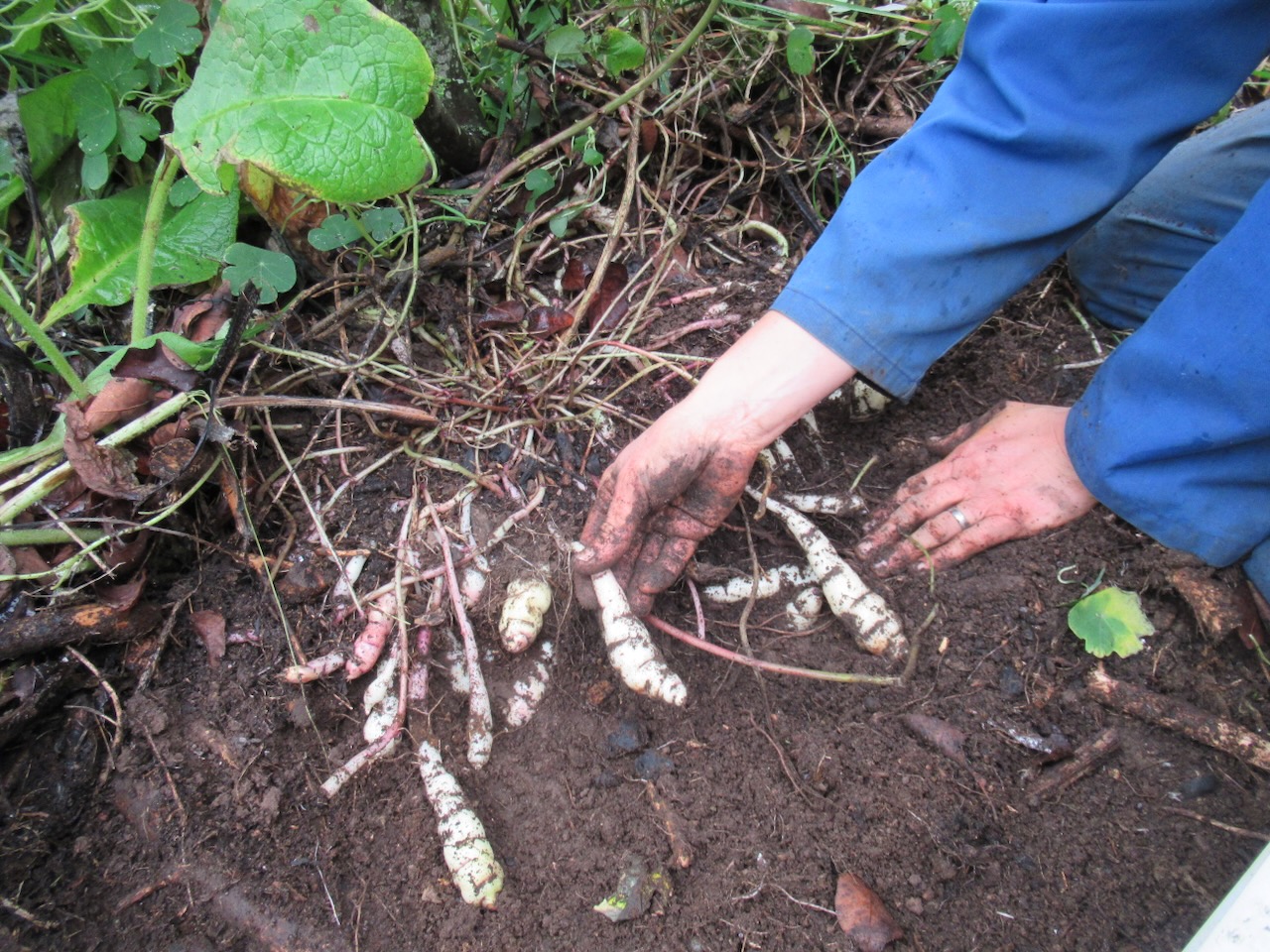
Mashua is exceptionally nutritious and naturally rich in vitamin C, antioxidants, dietary fibre, and minerals. Compared with many other root vegetables, it also contains relatively high levels of protein. Like other members of the nasturtium family, Mashua contains natural glucosinolates and isothiocyanates—compounds currently being studied for their antioxidant, antimicrobial, and health-supporting properties.
Almost every part of the plant is edible. The young leaves have a pleasant peppery flavour similar to garden nasturtiums and can be enjoyed in salads, used as wraps, or lightly cooked like spinach. The flowers are sweet with delicate hints of anise and make beautiful edible garnishes.
The tubers are remarkably versatile:
When roasted, Mashua develops a rich, creamy texture with a unique sweet flavour that many people describe as a combination of potato, sweet potato, liquorice, and vanilla. Its complex flavour pairs beautifully with butter, garlic, rosemary, cumin, smoked paprika, and slow-cooked meats.
One of the great joys of growing Mashua is that it offers beautiful flowers, lush foliage, excellent companion planting qualities, and abundant harvests—all from a single remarkably productive plant.
* This information is provided for educational purposes only and is not intended to diagnose, treat, cure, or prevent any disease.
Below: Record harvest! 1 plant yielded 6.7 kilos of tubers. 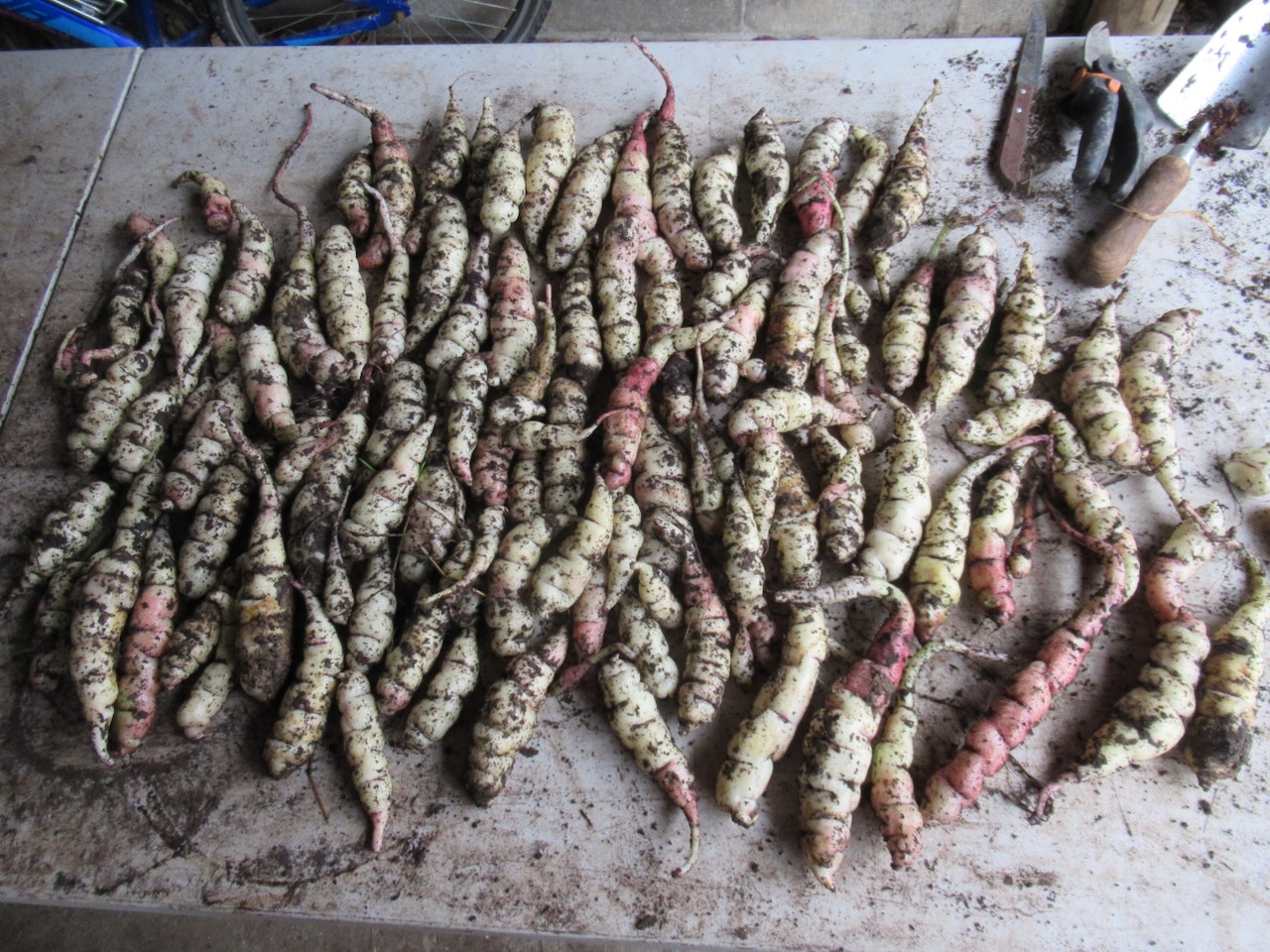
Ingredients: live plant material to plant into your garden
Wow. We have just had our first Mashua tuba tonight. We roasted x2 and grated x2 onto a salad. What an amazing vegetable.
Family: Asteraceae
Common names: Goldenrod, European Goldenrod, True Goldenrod, Woundwort
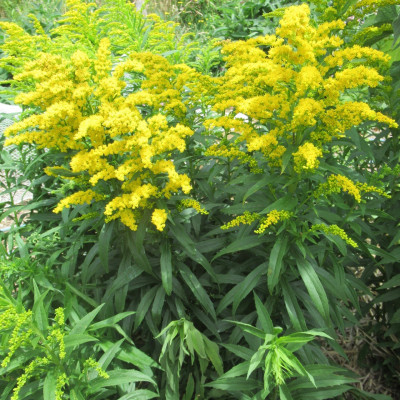
Goldenrod is a beautiful hardy perennial with graceful spikes of brilliant golden-yellow flowers that bloom from late summer into autumn. A favourite in cottage gardens, wildflower meadows, herb gardens, and pollinator plantings, it attracts bees, butterflies, and many other beneficial insects while adding a splash of colour late in the growing season.
Traditionally valued in European herbal medicine, goldenrod has long been used as a medicinal herb and was once applied to support wound healing. The vibrant flowers have also been used to produce a natural yellow dye.
Your plant is shipped during its winter dormancy as a bare-root crown with healthy growing buds already formed but little or no top growth (see example image below). Simply plant it into your garden over winter and it will emerge vigorously in spring, returning year after year with minimal care.
Growing instructions can be found below.
Family: Apiaceae
Lovage is a hardy, long-lived perennial herb treasured for its rich, celery-like flavour and remarkable productivity. Every part of the plant is useful—the leaves add depth to soups, stews and salads, the stems can be enjoyed like celery, the seeds are used as a spice, and the roots have a long history of culinary and traditional herbal use.
Order is for 1 dormant crown with healthy growing buds. Simply plant it into your garden upon arrival and watch it burst into vigorous new growth in spring. Growing instructions, harvesting tips, and traditional uses are provided below.
Bulbine frutescens
Family: Asphodelaceae
Common names: Burn jelly plant, stalked bulbine, snake flower, cat’s tail
Burn Jelly Plant is a hardy, waterwise perennial valued for both its ornamental beauty and traditional medicinal uses. With its succulent foliage and cheerful star-shaped flowers, it makes an excellent ground cover, especially when planted en masse or used in rock gardens and dry landscapes. Easy to grow and drought tolerant, it is a popular addition to low-maintenance gardens.
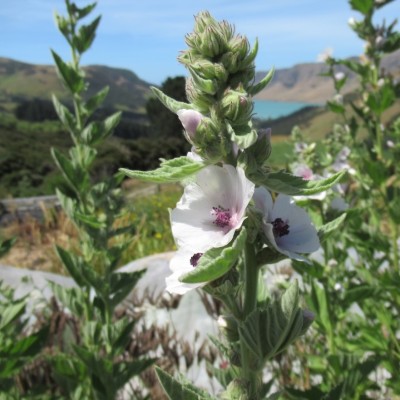
Marshmallow Crowns (Althaea officinalis)
Marshmallow is a traditional medicinal herb valued for its soothing properties. The leaves and roots have historically been used to support inflammation and irritation of the respiratory, digestive, and urinary systems, including dry coughs, stomach irritation, and urinary tract discomfort.*
Marshmallow goes dormant in winter. Each order includes one marshmallow crown cutting with a growing tip (see image below). Simply plant into your garden over winter and watch it emerge vigorously in spring.
Valerian Crowns (Valeriana officinalis)
Valerian is a well-known medicinal herb traditionally used to support restful sleep and help with insomnia.*
Each order includes 1 healthy valerian crown cutting with a growing tip. Plant directly into your garden over winter and it will emerge again in spring. See photos below for examples of the growing tips.
Organically grown at KoruKai Herb Farm without synthetic fertilisers, pesticides, or herbicides.
Because we only dig this plant every 2 years, we will not have it available in 2026, but we will have heaps in 2027.
Available again in July 2027. Sign up below to join the waiting list.
Elecampane Crowns (Inula helenium)
Elecampane is a striking medicinal perennial traditionally valued for supporting respiratory health and herbal wellness practices.*
Each order includes 1 healthy elecampane crown with active growing tip(s) (see images below). Simply plant into your garden over winter and watch it emerge vigorously in spring. Under good growing conditions, a single plant can often be lifted and divided the following winter, producing approximately 3–6 new plants within a year.
Rosemary (Salvia rosmarinus)
Family: Lamiaceae
Rosemary is a beautiful evergreen Mediterranean herb, treasured for its fragrant, needle-like leaves, stunning blue flowers, and wide range of culinary and medicinal uses. Hardy, drought tolerant, and long-lived, it makes an attractive addition to herb gardens, food forests, edible hedges, and pollinator plantings.
Flowering from late winter through spring, Rosemary provides an important early nectar source for honeybees and other beneficial insects when few other plants are in bloom. Its aromatic foliage is indispensable in the kitchen, pairing beautifully with roasted vegetables, potatoes, breads, lamb, poultry, and many Mediterranean dishes.
Your order includes one healthy bare-rooted seedling, ready to establish quickly in your garden or a large container. Growing instructions, harvesting advice, and traditional medicinal uses are provided below.
Chinese Artichoke / Crosnes (Stachys affinis)
Family: Lamiaceae
Chinese Artichokes, also known as Crosnes, are a delicious and unusual perennial root vegetable grown for their crisp, spiralled white tubers. Easy to grow and highly productive, they return year after year, producing abundant harvests from late autumn through winter.
The distinctive tubers resemble tiny grubs but are a gourmet delicacy with a wonderfully unique texture. Eaten raw, they are crisp, juicy, and slightly sweet, with a flavour reminiscent of water chestnuts. Cooked, they become tender, creamy, and subtly nutty, somewhere between a young potato, kūmara, and Jerusalem artichoke. In France, where they are known as Crosnes, they are traditionally braised in butter and fresh herbs—a simple preparation that beautifully highlights their delicate flavour.
Your order includes a starter pack of approximately five healthy tubers, ready for planting. Once established, the plants gradually multiply underground, providing increasingly generous harvests each year.
Chinese Artichokes are hardy, frost tolerant, and winter dormant, making them an excellent perennial vegetable for New Zealand gardens. Growing instructions, harvesting advice, and culinary tips are provided below.
Currently unavailable for 2026. Due to an unusually cool and marginal growing season, our turmeric crop produced very little rhizome division this year. As a result, we will not have plants available for sale in 2026.
Expected availability: July 2027. Please sign up below to join the waiting list and be notified when plants become available again.
Turmeric (Curcuma longa)
Family: Zingiberaceae
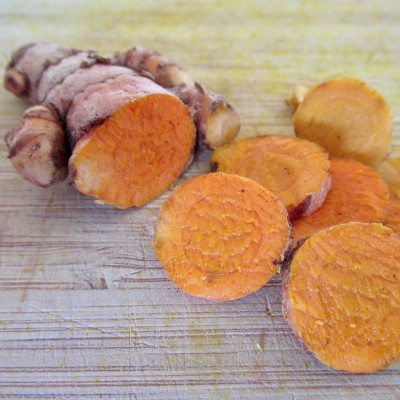
Turmeric is one of the world's most celebrated medicinal and culinary plants, prized for its vibrant golden rhizomes and long history of use in traditional herbal medicine. A close relative of ginger, it thrives in warm conditions and produces lush tropical foliage as well as highly valued underground rhizomes rich in curcuminoids—the compounds responsible for turmeric's distinctive colour and many of its researched health benefits.*
Widely used in curries, teas, tonics, and herbal preparations, turmeric has become a cornerstone of both traditional and modern wellness practices. Research continues to investigate its role in supporting healthy inflammatory responses, antioxidant activity, and overall wellbeing.
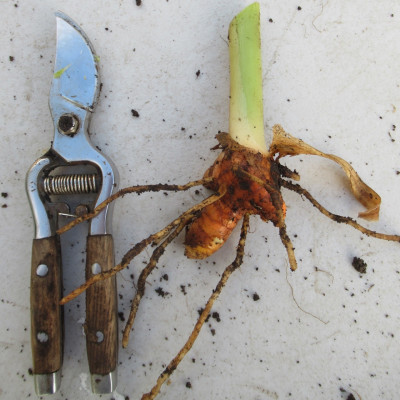
When available, each order includes one healthy turmeric crown, ready to establish and produce a new clump of rhizomes. Growing instructions, harvesting information, and culinary uses are provided below.
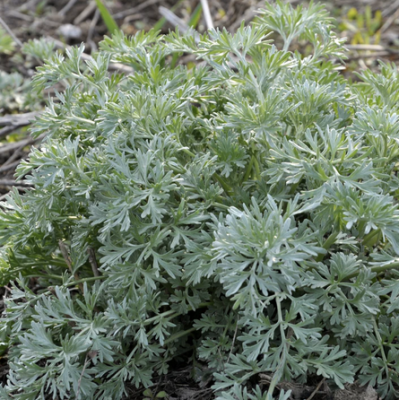
Wormwood (Artemisia absinthium)
Family: Asteraceae
Common names: Wormwood, Absinthe Wormwood, Green Ginger
Wormwood is a hardy, aromatic perennial herb prized for its striking silvery foliage, intense bitterness, and powerful medicinal properties. Traditionally used as a digestive tonic and vermifuge, it is one of the classic bitter herbs of Western herbal medicine. Easy to grow and drought tolerant once established, Wormwood thrives in poor soils and makes a beautiful structural plant in the herb garden.
Wormwood dies down in winter. You will receive a dormant crown with established shoots.
Below you’ll find growing instructions, medicinal uses, and herbal preparation ideas.
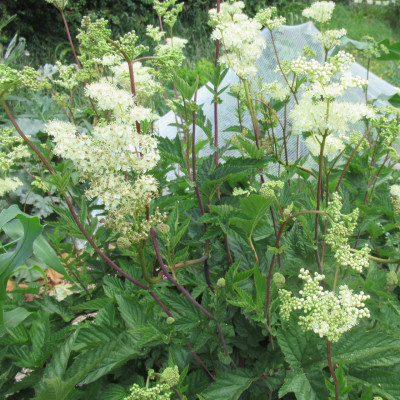
Meadowsweet (Filipendula ulmaria)
Family: Rosaceae
Common names: Meadowsweet, Mead Wort
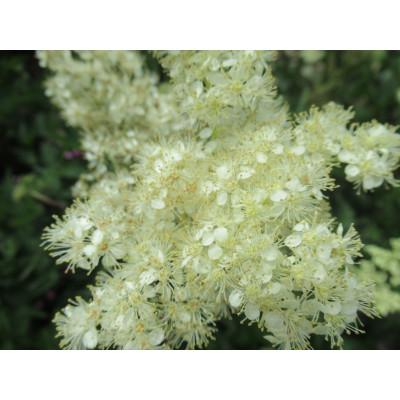
A beautiful, hardy perennial herb treasured for both its elegant creamy-white flower heads and its long history of traditional herbal use. Meadowsweet thrives in moist soils and produces masses of sweetly scented flowers that attract bees and other beneficial insects throughout summer.
Order is for 1 healthy dormant crown, carefully divided during winter dormancy. Meadowsweet divides exceptionally well, giving us an excellent re-establishment rate. Simply plant it into your garden upon arrival and enjoy many years of abundant growth.
Growing instructions, harvesting tips, and traditional herbal uses are provided below.
Sorrel (Rumex acetosa)
Family: Polygonaceae
Common names: Sorrel, Garden Sorrel, Lemon Sorrel
Sorrel is a hardy, long-lived perennial vegetable prized for its vibrant green leaves and distinctive fresh, lemony flavour. One of the first edible greens to emerge in spring, it provides an abundant harvest over many months and is delicious in salads, soups, sauces, omelettes, quiches, and pesto. Easy to grow and remarkably productive, Sorrel quickly forms generous clumps that can be divided every few years to create new plants.
Your Sorrel is supplied as a dormant root division during winter, with little or no foliage visible at the time of purchase. Simply plant it into the garden or a pot, and as the soil warms in spring it will send up vigorous new shoots.
During the first season, harvest lightly to allow the plant to establish a strong root system, and remove flower stalks as they appear to encourage continuous leaf production. After around a year, the clump can be lifted and divided to propagate additional plants and keep it growing vigorously for many years.
Lemon Balm (Melissa officinalis)
Family: Lamiaceae
Common names: Lemon Balm, Balm Gentle
Lemon Balm is a vigorous, easy-to-grow perennial herb from the mint family, loved for its fresh citrus fragrance, soothing medicinal properties, and delicious flavour. Adaptable and generous, it thrives in a wide range of soil conditions and produces abundant growth throughout the season. With regular harvesting, we typically enjoy 3–4 cuts each year.
Lemon Balm dies down in winter. You will receive a dormant plant.
Below you’ll find growing instructions, medicinal uses, and herbal preparation ideas.
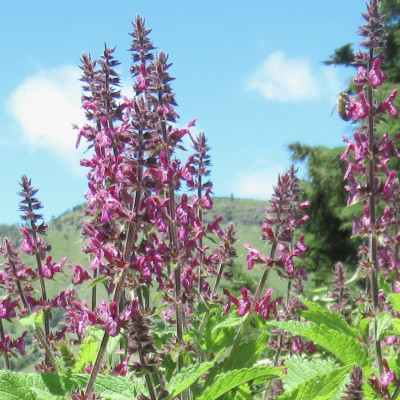
Woundwort (Stachys sylvatica)
Family: Lamiaceae
Woundwort is a hardy woodland perennial from the mint family with a long history of use as a traditional first-aid herb. For centuries it has been valued for supporting the healing of cuts, wounds, bruises, and skin irritations, earning its common name through generations of herbal use. In summer, it produces elegant spikes of deep purple flowers that are highly attractive to bees and other beneficial pollinators, while its lush green foliage makes an excellent addition to woodland gardens and food forests.
Your order includes 3 dormant plants with healthy growing tips, ready to establish quickly and send up vigorous new growth in spring. Please see the photos and growing information below.
Family: Asteraceae
Common names: Meadow Arnica, Arnica
Meadow Arnica is a hardy, spreading perennial prized for its vibrant golden-yellow flowers and long history of traditional herbal use. Unlike the European mountain arnica, this North American species is easier to grow in the home garden, forming attractive clumps that return year after year and provide abundant flowers for making infused oils, salves, balms, and liniments.
Easy to establish and cold hardy, Meadow Arnica thrives in full sun to partial shade in well-drained, compost-rich soil. It spreads gradually by underground rhizomes, making it an excellent addition to medicinal herb gardens and pollinator plantings.
Each order includes three dormant rhizomes with growing buds, ready to plant. Growing instructions, harvesting advice, and traditional herbal uses can be found below.
Apple Mint (Mentha suaveolens)
Family: Lamiaceae
Common names: Apple Mint, Woolly Mint, Fuzzy Mint
Apple Mint is a wonderfully fragrant and easy-to-grow perennial herb, loved for its soft, velvety leaves and refreshing apple-mint flavour. Delicious in herbal teas, iced drinks, desserts, fruit salads, and savoury dishes, it is one of the most versatile mints for the kitchen. Its sweet aroma, attractive foliage, and nectar-rich flowers also make it a favourite with bees and other beneficial pollinators.
Your plant is supplied bare-rooted to ensure it arrives in excellent condition. Simply plant it into a pot or directly into the garden on arrival, water well for the first few days, and it will quickly establish into a vigorous, productive herb. Growing instructions, harvesting tips, and culinary uses are provided below.