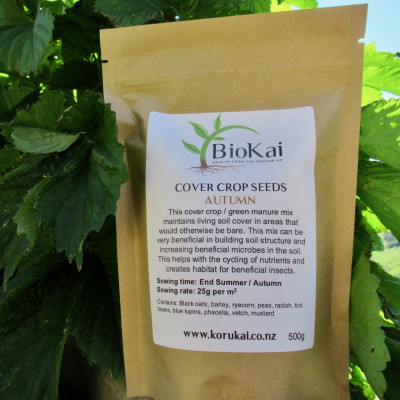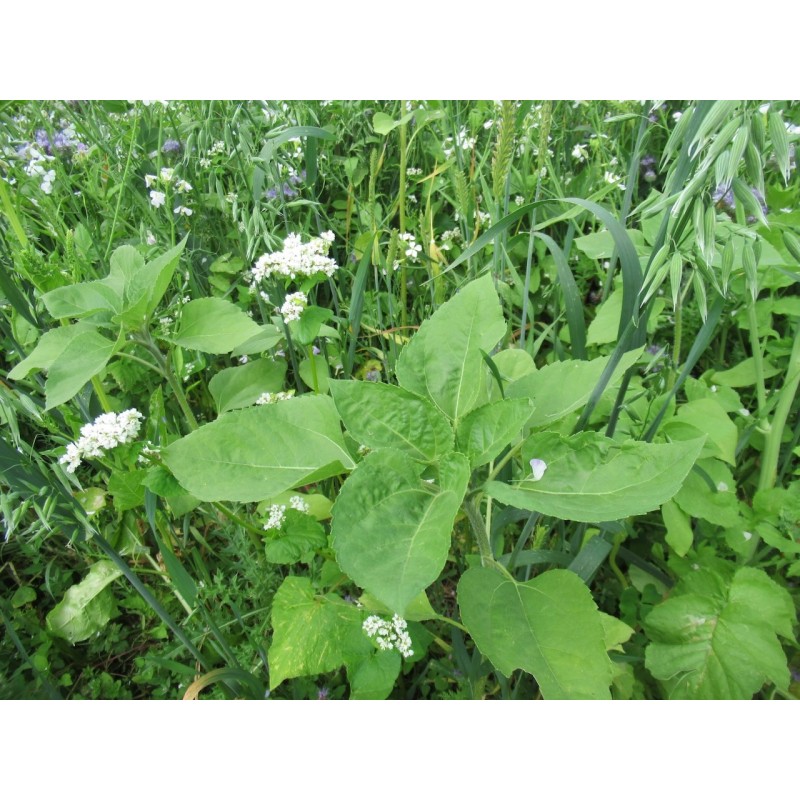


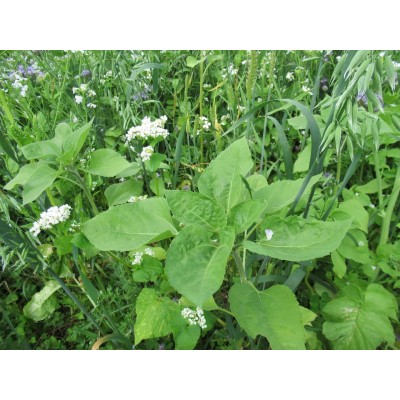

This cover crop seeds or green manure seeds mix has been blended to achieve maximum benefit. It can help with common challenges such as compaction, weed pressure, pests and diseases, low fertility, leaching and erosion.
Best sown between August/September and December/January, depending on your climate.
This diverse mix maintains living soil cover in areas that would otherwise be bare. This mix contains seeds from 8 plant families as well as legumes (nitrogen fixing plants), which has been proven in field trials to be very beneficial to build soil structure and to increase beneficial microbes in the soil.
For autumn sowing please see our Autumn Mix.
Sowing rate: 25g per m2
Available in 500g (for 20 m2), 1kg (for 40 m2), 10kg (for 400 m2), 20kg (for 800 m2). Please select below.
 Security policy
Secure credit card, bank transfer or POLi payment!
 Delivery policy
Proudly support NZ Post/CourierPost!
 Return policy
We exchange or refund if you are not happy!

Guarantee safe & secure checkout
We have put together this blend of plants for maximum benefit to the soil and your garden. According to the longest-running biodiversity study in the world in Jena, Germany (more info here: Jena Experiment) we need 6-8 plants across four plant families to see the greatest benefit.
Our mix contains 11 plants from 8 families to ensure your soil gets humming!
Spring Mix contains: Sunflowers, Phacelia, Common vetch, Forage Barley, Black oats, Buckwheat, Blue Prussian Peas, Ag radish, Crimson clover, Calendula, Linseed
All seeds are sourced from New Zealand! Untreated seeds!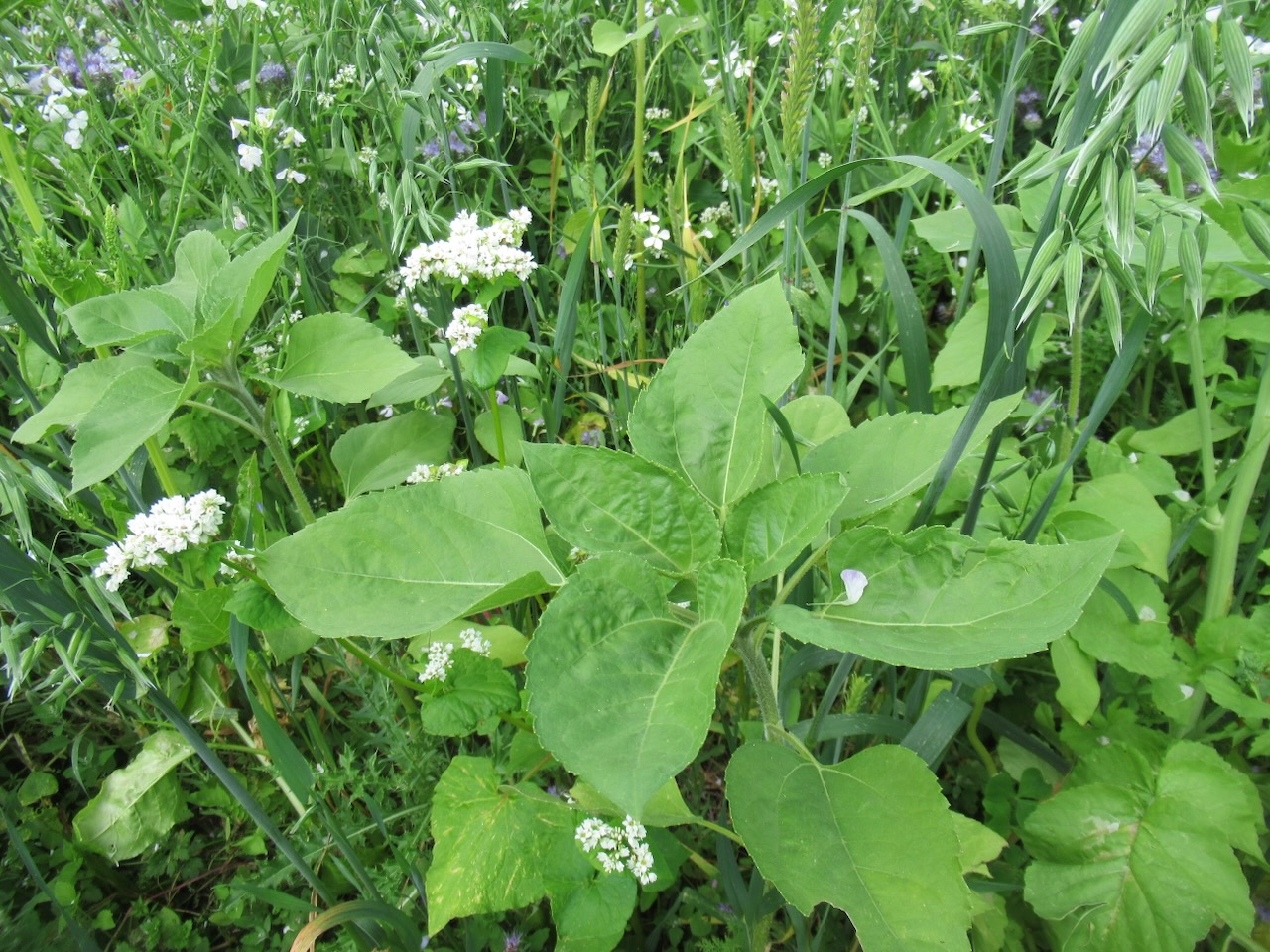
This blend is best for spring sowing. Mid and late summer sowings may need irrigation to do well before winter sets in. It can be left to winter over and chopped down in spring. Some plant will die down in winter as they do not tolerate frost. In a glasshouse with enough irrigation you may be able to sow it in winter. In the north of the North Island it can be used pretty much year round.
Benefits of the diverse mix
* Nitrogen fixation by beneficial microbes within the nodules of legumes (vetch, peas, clover)
* Support mycorrhizal fungi (oats, buckwheat)
* buckwheat roots release acids that solubilise ‘locked up’ soil phosphorous to increase plant available phosphorous
* Improves soil structure (sunflowers, radish)
* Living roots hold soil together and feed soil microbes
* Increases water holding capacity of soil
* Plants feed microbes by supplying them with sugars made through photosynthesis. Great mix of plants = greater mix of beneficial fungi and bacteria
* Deals with compaction
* Prevents damage from the sun, wind and rain
* Suppresses weeds
* Attracts and feeds beneficial insects who control pests
* Increases the fertility of the soil and enhances nutrient cycling
* Increases soil carbon and organic matter
How to use
1. This cover crop is great to sow in lawn or paddock areas that you intend to transform into a garden in the near future. Mow the lawn (or let it graze) continuously really short over 2-4 weeks to deplete the reserves. Break up the top layer and sprinkle the seeds over the top. Rake the seeds in lightly and cover with a thin layer of mulch (wood chips, straw etc). Cover the area with bird netting. Keep well watered for 1-2 weeks to enhance seed germination.
2. Use this green manure mix between crops. After harvesting a crop sprinkle the seeds on the bare ground and lightly rake them into the top layer of the soil. Cover with a thin layer of mulch and protect with bird netting. Keep well watered for 1-2 weeks to enhance seed germination.
It is very beneficial to apply a mist of compost and vermicast extract over the area once the seeds have been sown to add beneficial microbes. Please see our blog and compost extract bag for more details on this.
At the flowering stage you can chop and drop the plant material and use it as mulch. Then plant your seedlings into this with the addition of compost and vermicast. The beneficial effect of the diverse cover crop has a "legacy effect of 6 months" (Dr. Christine Jones) and is greatly beneficial for the crop that follows.
PLEASE NOTE: It is our intention to supply a consistent selection of varieties for this blend. However, we reserve the right to adjust the recipe for this blend when it becomes necessary, due to seed availability, to do so. We would update the above seed list if this mix changes.
Ingredients: Spring Mix of cover crop seeds
I've sown two lots of cover crop seeds now to try and retain moisture over summer. They're germinating within 3 to 4 days, growing quickly - up to 20cm within 2 weeks I estimate. All seed types of vigorous. I've given 2 bags away as gifts.
I purchased this cover crop to try because of the diversity of the mix. I was curious to see how it would perform, and have sown it in several different places in the garden this spring with great results. It germinates easily and quickly and creates a varied and interesting mix of plant cover on vacant ground. Other mixes I have tried will often result in one species dominating over the others, but this mix is very varied. A wonderful vibrant profusion of texture, with the plants all growing strongly. Very happy with the performance of this mix.
Heavy-duty TeaLAB extract bag made from 400 micron nylon mesh and climbing-grade binding, designed for making high-quality compost and vermicast extracts. Durable, reusable, and built to last.
A robust, reusable extraction tool designed for serious gardeners, growers, and soil biology enthusiasts.
Perfect for use in compost extract or tea brewers with included carabiner clip for easy suspension.
Available in two sizes:
This cover crop seeds or green manure seeds mix has been blended to achieve maximum benefit. It can help with common challenges such as compaction, weed pressure, pests and diseases, low fertility, leaching and erosion.
Best sown between January/February and April/May, depending on your climate.
This diverse mix maintains living soil cover in areas that would otherwise be bare over winter. This mix contains seeds from 5 plant families as well as legumes (nitrogen fixing plants), which has been proven in field trials to be very beneficial to build soil structure and to increase beneficial microbes in the soil.
For spring sowing please see our Spring Mix.
Sowing rate: 25g per m2
Available in 500g (for 20 m2), 1kg (for 40 m2), 10kg (for 400 m2), 20kg (for 800 m2). Please select below.
A fantastic cherry tomato. The plants are laden in summer. Riesentraube means "giant bunches".
Produces bunches of large red fruit with pointed ends.
Heirloom variety dating back to 1800's from Germany.
Good full bodied complex flavour.
Jerusalem Artichoke (Helianthus tuberosus)
Also known as Sunchoke or Sunroot
Jerusalem Artichoke is a hardy, highly productive perennial sunflower grown for its crisp, sweet, and nutritious underground tubers. Easy to grow and remarkably resilient, it produces abundant harvests year after year with very little maintenance, making it an excellent addition to kitchen gardens, food forests, and permaculture systems.
The tubers can be enjoyed raw, roasted, sautéed, mashed, or added to soups and stews. Their flavour is often described as a cross between water chestnuts, potato, and artichoke, with a pleasant nutty sweetness.
Each order contains three healthy planting tubers. Choose either three small or three large tubers using the options below.
Growing instructions, harvesting advice, and culinary uses can be found below.
Egyptian Walking Onions are a hardy, perennial “plant once and harvest for years” onion that keeps on giving season after season. Also known as Tree Onions, Top Onions, or Winter Onions, they produce edible greens, small bulbs, and unique bulbils that replant themselves naturally—walking their way across your garden.
Incredibly easy to grow and highly productive, these resilient onions multiply year after year, making them a must-have for any edible garden, food forest, or self-sufficiency setup.
1 bag contains 10 bulbils/topsets.
Chinese Artichoke / Crosnes (Stachys affinis)
Family: Lamiaceae
Chinese Artichokes, also known as Crosnes, are a delicious and unusual perennial root vegetable grown for their crisp, spiralled white tubers. Easy to grow and highly productive, they return year after year, producing abundant harvests from late autumn through winter.
The distinctive tubers resemble tiny grubs but are a gourmet delicacy with a wonderfully unique texture. Eaten raw, they are crisp, juicy, and slightly sweet, with a flavour reminiscent of water chestnuts. Cooked, they become tender, creamy, and subtly nutty, somewhere between a young potato, kūmara, and Jerusalem artichoke. In France, where they are known as Crosnes, they are traditionally braised in butter and fresh herbs—a simple preparation that beautifully highlights their delicate flavour.
Your order includes a starter pack of approximately five healthy tubers, ready for planting. Once established, the plants gradually multiply underground, providing increasingly generous harvests each year.
Chinese Artichokes are hardy, frost tolerant, and winter dormant, making them an excellent perennial vegetable for New Zealand gardens. Growing instructions, harvesting advice, and culinary tips are provided below.
Available again in March/April 2027. Please sign up below to join the waiting list.
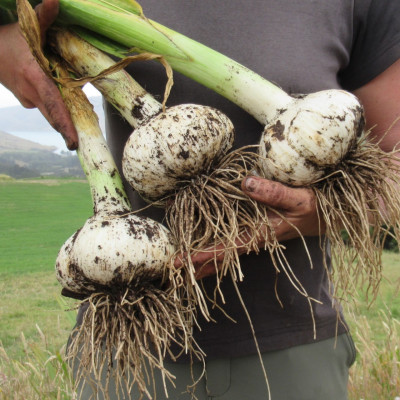
Elephant Garlic (Allium ampeloprasum)
Family: Alliaceae
Elephant Garlic is becoming increasingly popular for its large bulbs and mild, distinctive flavour. Easier to grow than true garlic, it produces reliable crops in a wide range of home gardens and is well suited to New Zealand conditions.
Each pack contains 3 seed cloves.
Organically grown at KoruKai Herb Farm without the use of chemical fertilisers, pesticides, herbicides, or fungicides.
Calendula (Calendula officinalis) seeds from our specially selected KoruKai Herb Farm collection.
Over many seasons, we have carefully selected and bred these plants for their vibrant deep-orange colour and large flower heads. Beautiful in the garden and excellent for making rich, nourishing calendula-infused oils and herbal preparations.
This bush tomato is fantastic. No need to stake, no need to pinch out laterals. Very easy care and a prolific fruiter. Produces an abundance of fresh tomatoes for salads and cooking.
This cover crop seeds or green manure seeds mix has been blended to achieve maximum benefit. It can help with common challenges such as compaction, weed pressure, pests and diseases, low fertility, leaching and erosion.
Best sown between January/February and April/May, depending on your climate.
This diverse mix maintains living soil cover in areas that would otherwise be bare over winter. This mix contains seeds from 5 plant families as well as legumes (nitrogen fixing plants), which has been proven in field trials to be very beneficial to build soil structure and to increase beneficial microbes in the soil.
For spring sowing please see our Spring Mix.
Sowing rate: 25g per m2
Available in 500g (for 20 m2), 1kg (for 40 m2), 10kg (for 400 m2), 20kg (for 800 m2). Please select below.
Available again in March/April 2027 — please sign up below to join the waiting list.
White Southern Softneck is a vigorous, reliable, and historically significant garlic variety that rewards growers with beautiful bulbs, excellent flavour, and strong garden performance year after year.
Organically grown at KoruKai Herb Farm, Banks Peninsula, New Zealand.
Our seed garlic is grown without chemical fertilisers, pesticides, herbicides, or fungicides, producing strong, healthy cloves ideal for home gardens and small-scale growing.
Demand for our organic seed garlic is high every year and stock always sells out quickly.
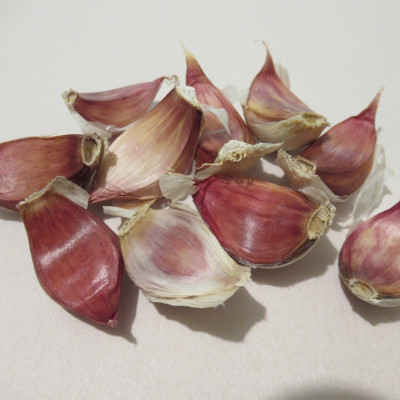
Each bag contains 10 seed garlic cloves as pictured. Please read the growing and storage information below and store cloves in a cool, dry place until planting time.
This is our favourite tomato to eat raw and for salads. Low in acidity and great flavour.
It produces orange, medium sized and round tomatoes.
This orange tomato contains higher levels of Tetra-cis-lycopene which is easily absorbed in the raw fruit and helps to promote health and fight against cancer and heart disease.